If your SQCDP board still depends on whiteboards, spreadsheets, or disconnected tools, you are likely spending too much time updating information and not enough time acting on it.
That is why more manufacturers are moving to digital SQCDP. The goal is not to replace one board with another. It is to make daily management easier to maintain, easier to scale, and more useful for decision-making.
With a platform like DigiLEAN, teams can bring daily performance, actions, and escalation into one structured routine instead of managing them across multiple formats.
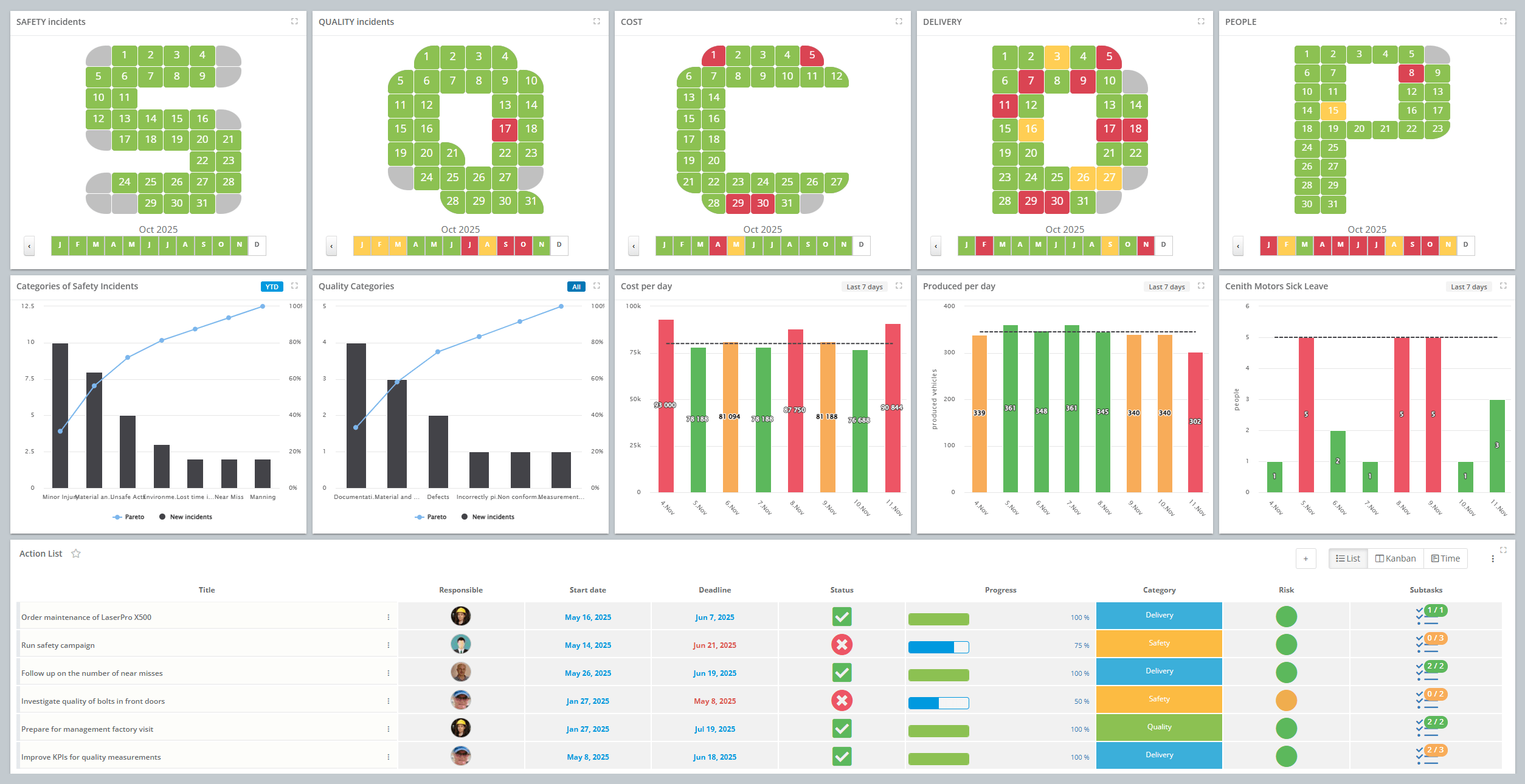
SQCDP helps teams review performance across:
In a digital setup, those measures should do more than show status. They should help teams spot issues early, assign clear actions, and escalate problems before they grow.
If your board only displays data, it is not yet doing its job.
Before building the board, define how your teams will use it.
Ask:
A good digital SQCDP setup reflects the way your operation runs. That means building the board around your real meeting structure, not around a generic dashboard layout.
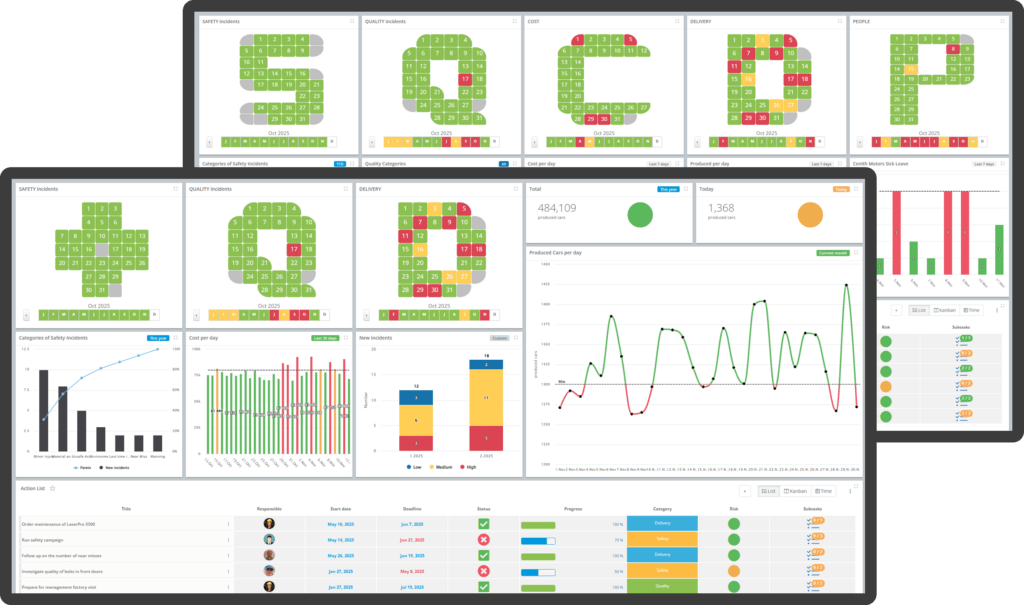
One of the fastest ways to lose adoption is to overload the board.
Start with a small set of KPIs that are:
For example:
Digital SQCDP boards makes it easy for teams to see whether they are on target and where follow-up is needed.
A digital SQCDP board should help teams answer three questions:
| Question | What should happen |
|---|---|
| Are we on target? | Confirm status quickly |
| If not, what is the issue? | Make the gap visible |
| What happens next? | Assign action or escalate |
That means every off-target metric should lead to a clear next step: discussion, action, escalation, or follow-up. When DigiLEAN is used well, the board becomes part of the daily management routine rather than a separate reporting layer.
Digital boards do not create accountability on their own. You still need to define who does what.
| Role area | Clear ownership needed |
|---|---|
| KPI updates | Who updates performance data |
| Meeting leadership | Who runs the daily review |
| Actions | Who creates and follows up actions |
| Escalation | Who raises unresolved issues |
| Follow-up | Who checks that issues are closed |
This matters even more across shifts and departments. If the routine is unclear, the tool will not fix it. If the routine is clear, digital SQCDP can support it consistently across teams.
Do not launch digital SQCDP everywhere at once.
Start with one value stream, one production area, or one department where:
A pilot gives you the chance to test:
It also helps you build internal proof before scaling to more teams or sites.
The most successful digital SQCDP rollouts focus on behavior as much as configuration. Teams need to know:
The value comes from the routine. Digital SQCDP can support those habits, not replace them.
Once the pilot works, standardize the core elements so the process can scale without becoming fragmented.
| Area to standardize | Why it matters |
|---|---|
| KPI definitions | Keeps reporting consistent |
| Board structure | Makes boards easier to read across teams |
| Escalation rules | Prevents confusion about what moves up |
| Meeting cadence | Supports discipline and consistency |
| Action follow-up | Ensures issues do not disappear |
This is what allows you to scale without ending up with a different version of SQCDP in every department. With DigiLEAN, the aim should be a common daily management structure that still leaves room for local operational needs.
Digital SQCDP works best when it strengthens the daily management rhythm your teams already need: review performance, surface issues, assign actions, and escalate fast.
That is why implementation should start with the process, not the screen.
When digital SQCDP board is built into that routine naturally, it stops being “another tool” and becomes part of how the plant runs every day.
Yes, if you standardize the core structure first and allow only limited local variation.
Usually, operations or continuous improvement should own the process, with support from IT where needed.
Not necessarily. Start with the data that helps the team act daily. Automation should support the workflows, not complicate it.
You can watch DigiLEAN intro video to learn more, book a demo to walk through the workflow with an expert, or see the platform live by starting a free trial and exploring it yourself.