You can watch DigiLEAN intro video to learn more, book a demo to walk through the workflow with an expert, or see the platform live by starting a free trial and exploring it yourself.
Table of Contents
How Digital SQCDP Boards Improve Daily Management
Daily management in manufacturing depends on clear visibility, fast communication, and consistent follow-up. Many plants structure their daily meetings around SQCDP – Safety, Quality, Cost, Delivery, and People – to keep teams focused on operational performance.
However, when SQCDP boards are managed manually, keeping information updated and connected to action can become difficult.
Digital SQCDP boards help solve this by keeping the board current, structured, and connected to actions. Platforms like DigiLEAN allow teams to manage SQCDP boards digitally through interactive visual management and connected workflows.
- 6 minutes
- Updated May 22, 2026
The Role of the SQCDP Board in Daily Management
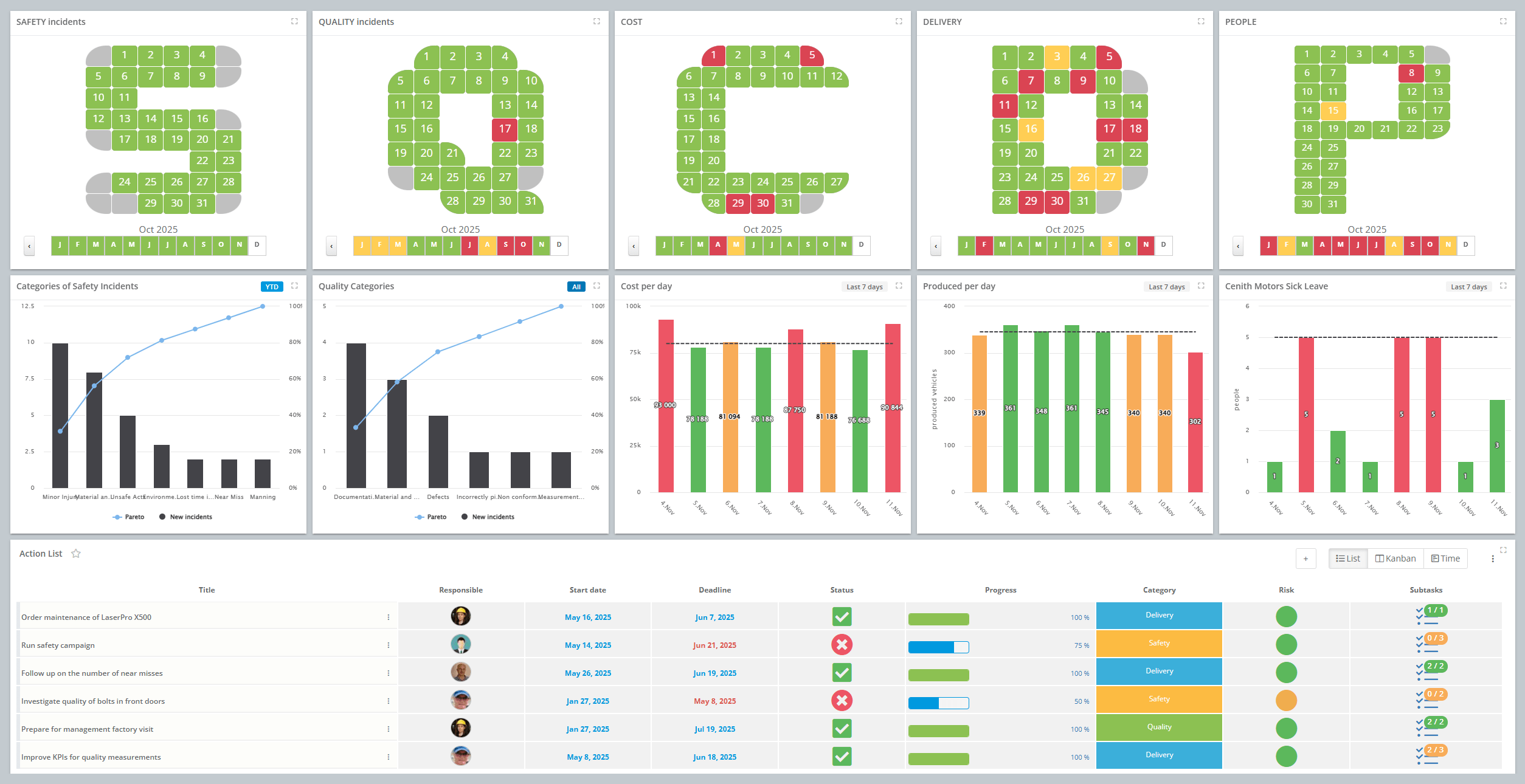
The SQCDP board provides a visual overview of operational performance.
During daily meetings, teams review each category:
- Safety – incidents, near misses, or safety observations
- Quality – defects, rework, customer complaints
- Cost – scrap, efficiency losses, overtime
- Delivery – production output, delays, missed schedules
- People – staffing levels, training, team availability
The goal is simple: identify deviations from plan and decide what actions are needed.
But the effectiveness of this process depends heavily on how the board is managed.
Why Manual SQCDP Boards Create Challenges
Many organizations still rely on physical boards or spreadsheets.
Common issues include:
- KPIs must be written manually every day
- Data may already be outdated during the meeting
- Action items are tracked elsewhere
- Issues raised on the board are not followed up systematically
As a result, the SQCDP board risks becoming a static display of numbers rather than a tool for managing operations.
How Digital SQCDP Boards Improve Daily Management
Keeping the SQCDP Board Up to Date
A digital board makes it easier to maintain accurate daily performance data.
Instead of manually updating charts or rewriting numbers each morning, teams can view current performance directly on the board.
For example:
During the morning meeting, the team reviews the Delivery section of the SQCDP board.
The board shows:
- Planned production
- Actual output
- Deviations highlighted visually
With digital boards in DigiLEAN, teams can update metrics quickly or connect them to existing systems, helping ensure the SQCDP board reflects current operational performance.
Capturing Issues Directly from the SQCDP Board
When a problem appears on the board, the team should be able to capture it immediately.
Example:
During the review of the Safety section, a near miss is discussed.
Instead of writing a note beside the metric, the issue can be registered as an deviation directly from the board.
In DigiLEAN, the Incidents module allows teams to document deviations, assign responsibility, and track follow-up while maintaining visibility in daily management.
This ensures that problems identified on the SQCDP board do not disappear after the meeting.
Turning SQCDP Deviations into Improvement Work
A key purpose of the SQCDP board is to trigger improvement actions when targets are missed.
Example:
The Quality metric shows a spike in defects.
Instead of discussing the problem repeatedly, the team creates an improvement idea directly from the board.
With DigiLEAN’s Improvements module, teams can:
- Register improvement ideas
- Assign responsibility
- Follow progress over time
This allows the SQCDP board to function as a starting point for continuous improvement activities.
Linking the SQCDP Board to Structured Problem Solving
Some problems require deeper analysis.
When recurring issues appear on the SQCDP board, they often need structured root cause analysis.
Example:
Delivery delays appear on the SQCDP board for several consecutive days.
The team initiates a structured A3 problem-solving process.
In DigiLEAN, digital A3 templates allow teams to:
- Define the problem
- Analyze root causes
- Identify countermeasures
- Track progress
This connects the SQCDP board with longer-term operational improvements.
Making the SQCDP Board Visible Across Teams
Physical boards are usually limited to one location or team.
Digital SQCDP boards allow information to be shared across shifts, departments, or sites.
For example:
- The night shift records a quality issue on the board.
- The day shift sees it immediately.
- Plant managers can review the board remotely.
With mobile access in DigiLEAN, team members can also view deviations, and improvements directly from the shop floor.
This improves transparency and reduces the need for separate reporting.
Making the SQCDP Board a Daily Management Tool
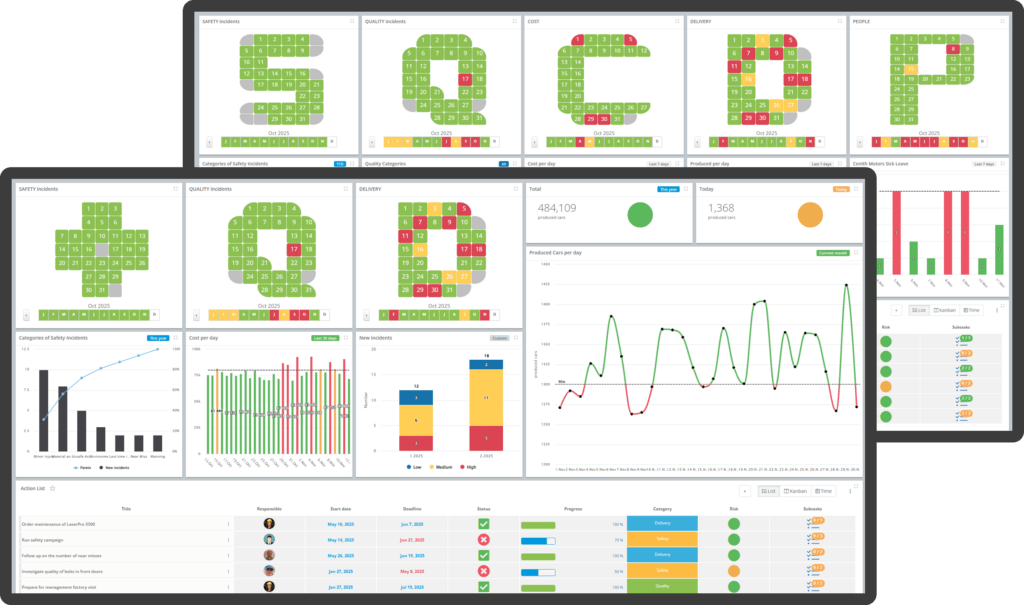
When used effectively, the SQCDP board becomes more than a visual display. It becomes a management tool that supports daily decision-making.
Digital boards help ensure that:
- performance data is current
- issues are captured immediately
- actions are tracked
- improvements are connected to operational performance
Platforms like DigiLEAN support this by combining digital visual boards with improvement management, deviation tracking, and structured problem-solving tools.
This helps teams move from reviewing performance to actively improving it.
Key Takeaways
A well-managed SQCDP board helps teams:
- Review daily operational performance
- Identify problems quickly
- Assign clear actions
- Follow up on improvements
Digital SQCDP boards strengthen this process by making the board:
- easier to maintain
- more accurate
- connected to workflows
The result is a SQCDP board that supports real daily operational management rather than just displaying metrics.
Frequently Asked Questions
What should an SQCDP board include?
An SQCDP board typically includes key metrics for Safety, Quality, Cost, Delivery, and People, along with visual indicators showing whether performance is on target. Many boards also include sections for daily actions or escalated issues.
How long should an SQCDP meeting take?
Most organizations aim to keep daily SQCDP meetings between 10 and 20 minutes. The goal is to review performance quickly, identify deviations, and assign actions.
Who should participate in SQCDP meetings?
Participants typically include team leaders, supervisors, and relevant operators. In many organizations, higher-level management also reviews SQCDP boards during layered management meetings.
Can SQCDP boards support multi-site operations?
Yes. Digital boards make it easier for organizations with multiple production sites to standardize SQCDP structures while allowing each team to track its own metrics.
What is the difference between a KPI dashboard and an SQCDP board?
A KPI dashboard usually displays performance metrics, while an SQCDP board is designed for daily operational management. It connects performance visibility with actions, problem solving, and continuous improvement.
Ready to strengthen your daily management?
- Published