Table of Contents

Digital vs. Manual Daily Management Systems in 2026

What manufacturing leaders need to know - and how to choose the right approach.
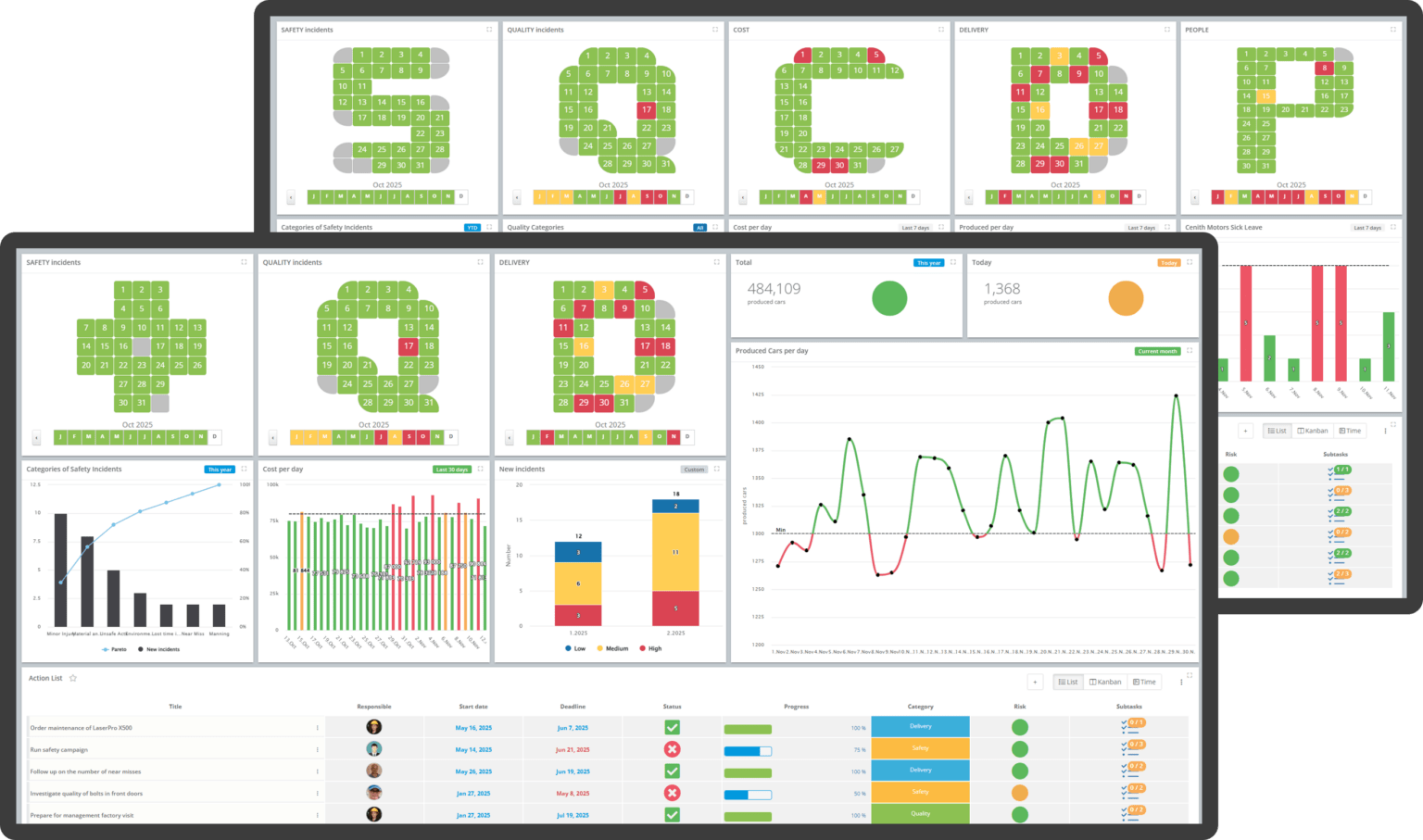
Daily management boards DigiLEAN

Daily Management Systems (DMS) are the backbone of operational control on the shop floor. Whether you run SQCDP boards on paper or use digital dashboards, the goal is the same: 
Make performance visible, drive accountability, and solve problems faster. 

But in 2026, the gap between manual and digital systems is no longer just about convenience – it directly impacts operational performance, speed, and scalability. 

This article breaks down the real, practical differences so you can decide what works best for your organization. 

What defines a Daily Management System today?

A modern DMS typically includes: 

  • KPI tracking (Safety, Quality, Delivery, Cost, People) 
  • Daily stand-up meetings 

The difference is how this system is executed: 

Manual System Digital System
Whiteboards, paper, Excel Digital boards (cloud-based)
Manual updates Real-time or automated data
Physical presence required Accessible anywhere
Limited data history Full data traceability

Where manual Daily Management Systems still work well

Manual boards still have strengths, especially in simpler environments. 

Advantages of manual systems 


  1. Simplicity
    • No IT setup required 
    • Easy to start in a day 


  1. Strong team engagement (initially) 
  • Visual, hands-on interaction, “Power-of-the-pen” 
  • Encourages discussion during meetings 


  1. Low cost
  • No software investment 

Limitations becoming critical in 2026

As operations grow more complex, manual systems begin to break down: 

  1. Data is outdated almostimmediately
  • KPIs are often updated once per shift (or later) 
  • Leaders act on yesterday’s problems, not today’s 


  1. No scalability
  • Multiple lines and sites = multiple physical boards 
  • No consolidated view across departments or plants 


  1. Weak follow-up on actions
  • Sticky notes get lost 
  • No ownership tracking over time 


  1. No transparency beyond the room
  • Management outside the shop floor has limited visibility 


  1. Heavy admin workload
  • Manual updates consume operator and supervisor time daily 

What defines a digital Daily Management System in 2026

Digital systems have evolved beyond “Excel on screens.” 

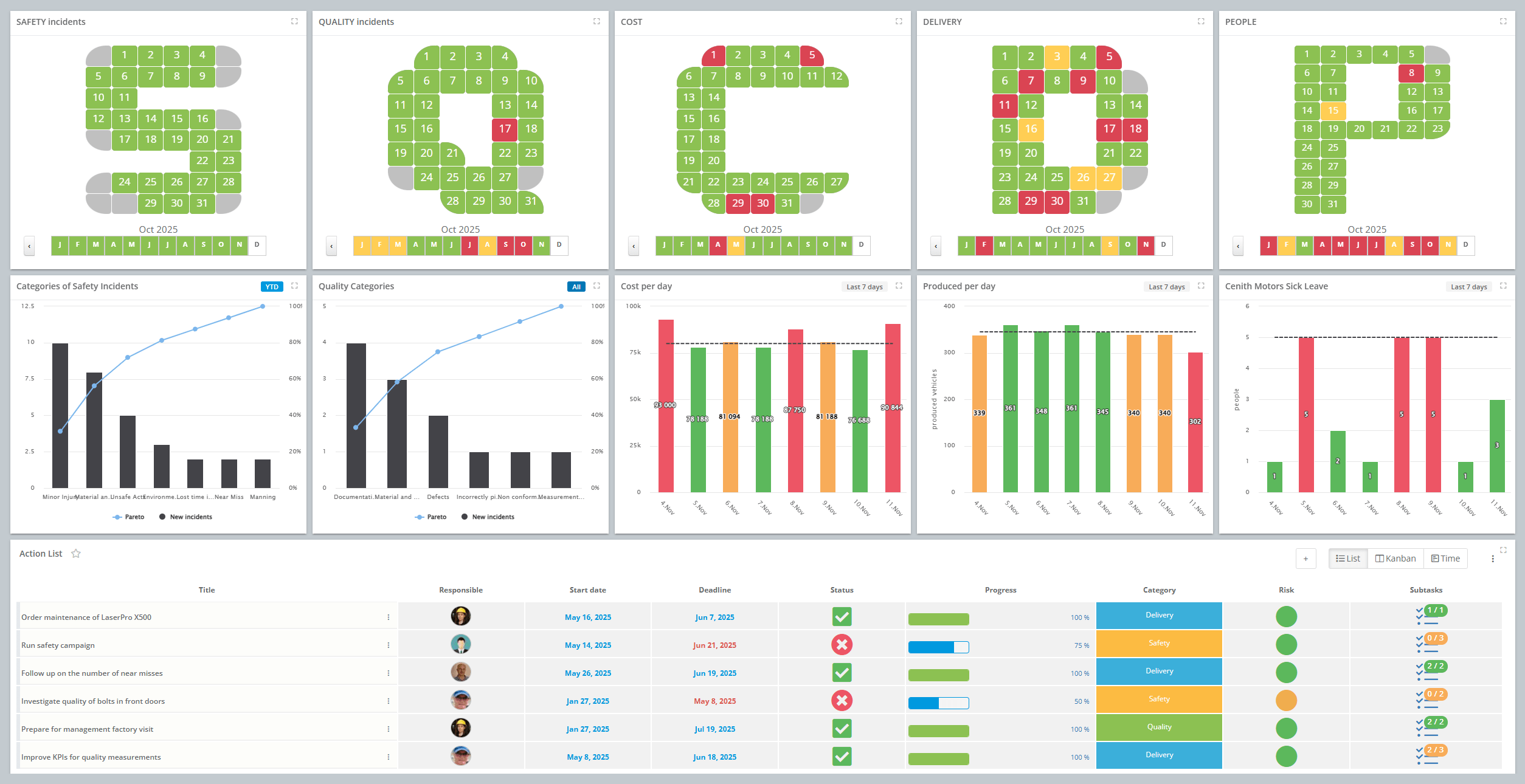
A modern digital DMS includes: 
  • Real-time KPI integration (MES, ERP) 
  • Structured problem-solving workflows 
  • Automatic escalation of deviations 
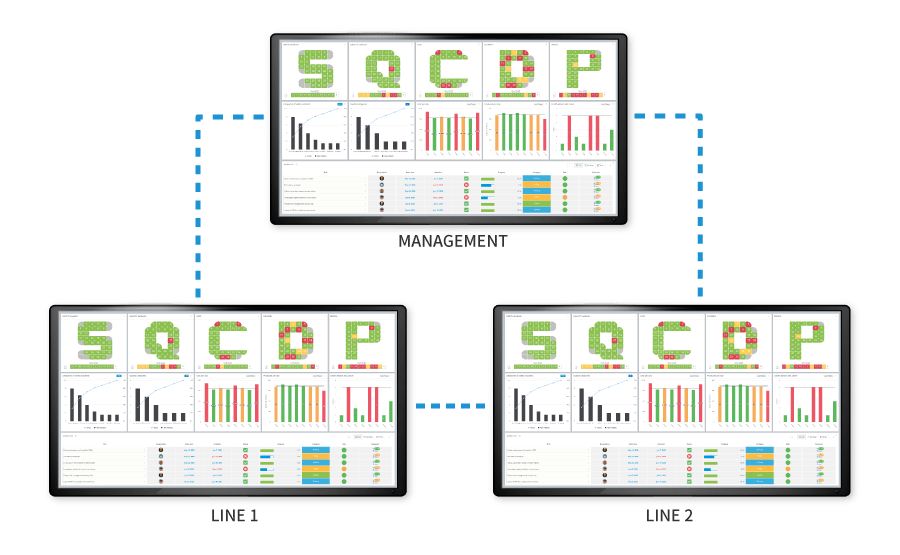
  • Cross-site visibility 

Key advantages of digital systems

  1. Real-time decision-making
  • KPIs update automatically 
  • Issues are visible as they happen 

👉 Impact: Faster response reduces downtime and defects 


  1. Stronger accountability
  • Every problem has:  
  • Owner 
  • Due date 
  • Status 

👉 No more “lost actions” 


  1. Standardization across teams and sites
  • Same structure across lines and plants 
  • Easier to scale Lean practices 


  1. Built-in escalation
  • Problems that aren’t resolved are automatically escalated 

👉 Leaders focus where it matters most 


  1. Data-driven continuous improvement
  • Historical data is stored automatically 
  • Trends are visible without manual effort 

👉 Enables: 

  • Root cause analysis 
  • Pattern recognition 
  • Better prioritization 


6. Reduced admin work 

  • No manual KPI updates 
  • Less time spent preparing meetings 

👉 Teams spend more time solving problems – not reporting them 

The real difference: execution, not theory

Both systems follow Lean principles. 
The difference is how effectively they are executed daily. 

Example: Deviation in production 

Manual system: 

  1. Issue occurs during shift 
  1. Written on whiteboard later 
  1. Discussed next day 
  1. Follow-up may be unclear 

Digital system: 

  1. Issue logged immediately 
  1. KPI affected in real time 
  1. Assigned to owner instantly 
  1. Escalated if not resolved 

👉 Result: Hours vs. days to react 

Common misconception: “Digital reduces engagement”

Many teams worry that moving away from physical boards will reduce interaction. 

Reality in high-performing plants: 

  • Meetings are still physical or hybrid 
  • Screens replace static boards 
  • Discussions improve because data is accurate and live 

👉 Engagement shifts from writing data → solving problems 
When should you move to digital?

You don’t need to digitize everything immediately. 

Strong signals it’s time to switch: 

  • Multiple production lines or departments 
  • Growing complexity in KPIs 
  • Repeated issues not being solved 
  • Lack of follow-up on actions 
  • Management lacks visibility across operations 
  • Too much time spent updating boards manually 

A practical transition approach

nstead of a full transformation, start here: 

Step 1: Stabilize your current DMS 

  • Ensure clear KPIs 
  • Standardize daily meetings 

Step 2: Digitize the board – not the process 

  • Replicate your SQCDP board digitally 
  • Keep meeting structure unchanged 

Step 3: Add real-time data 

  • Integrate key KPIs gradually 

Step 4: Introduce structured problem solving 

  • Standardize action tracking and escalation 

The bottom line

In 2026: 

  • Manual systems = good visibility, limited execution 
  • Digital systems = operational control at scale 

The key question is: 

“How quickly can we detect, act on, and solve problems?” 

Because in modern manufacturing, speed of execution is a competitive advantage.

Key takeaway

If your daily management system: 

  • Feels slow 
  • Requires too much manual work 
  • Struggles to drive accountability 

…it’s not a Lean issue – it’s a system limitation.

FAQs: Digital vs. Manual Daily Management Systems

How long does it typically take to implement a digital DMS?

Implementation time depends on the scope, but most manufacturing teams see initial value within a few weeks when starting with a pilot area. 

A practical approach is: 

  • Start with one production line or department 
  • Replicate your existing SQCDP board digitally 
  • Gradually expand once the team is comfortable 

👉 The key is not to redesign everything at once, but to digitize what already works. 

No – full integration is not required from the start. 

Many successful teams begin with: 

  • Manual input into a digital board 
  • Simple KPI tracking 
  • Action and escalation workflows 

Integrations with ERP or MES can be added later to: 

  • Automate KPI updates 
  • Improve data accuracy 
  • Reduce manual input 

👉 The biggest early value comes from structured execution and visibility, not automation alone. 

Adoption is one of the most common concerns – and the biggest success factor. 

What works in practice: 

  • Keep the daily meeting structure unchanged 
  • Use large screens on the shop floor (not laptops) 
  • Train team leaders first, not everyone at once 
  • Focus on solving real problems, not just using the tool 

👉 If the system helps operators solve issues faster, adoption follows naturally.

Teams often struggle not because of the tool – but because of the approach. 

Top mistakes include: 

  • Digitizing a broken process 
  • Adding too many KPIs at once 
  • Overcomplicating the setup 
  • Skipping training for team leaders 
  • Focusing on dashboards instead of daily routines 

👉 The rule: 
Fix the management process first – then digitize it. 

Ready to strengthen your daily management?

Discover how to improve daily management with DigiLEAN