Manufacturing teams solve problems every day. A machine stops unexpectedly, quality defects increase, deliveries are delayed, or production targets are missed. The challenge is that many organizations focus on fixing symptoms instead of eliminating the underlying cause. As a result, the same issues return again and again, consuming valuable time, resources, and production capacity.
Root Cause Analysis (RCA) is a structured problem-solving method used to identify the true reason a problem occurred so that corrective actions can prevent it from happening again. This guide explains how root cause analysis works in manufacturing, when to use it, and how digital tools can help standardize and accelerate the process.
Root Cause Analysis is a systematic approach to identifying the fundamental cause of a problem rather than treating its symptoms.
For example:
| Mistake | What it looks like on the floor | Why it backfires |
|---|---|---|
| Machine breakdown | Repair the machine | Preventive maintenance schedule not followed |
| High scrap rate | Rework defective products | Incorrect machine calibration procedure |
| Production delays | Add overtime | Frequent material shortages caused by inaccurate inventory data |
| Missed deliveries | Expedite shipping | Poor production planning process |
Without addressing the root cause, the same problem is likely to reappear.
The goal of RCA is simple: Fix the process, not just the problem.
Recurring issues can significantly impact operational performance.
Benefits of effective root cause analysis include:
For manufacturers focused on Operational Excellence and Lean Management, RCA is a critical capability that supports sustainable improvement.
Root cause analysis is particularly valuable when problems:
Examples include:
| Area | Example Problem |
|---|---|
| Production | Frequent line stoppages |
| Quality | Customer complaints increasing |
| Maintenance | Persistent equipment failures |
| Logistics | Material shortages causing delays |
| Safety | Repeated near-miss incidents |
| Supply Chain | Chronic supplier performance issues |
Start with a precise problem statement.
Poor example: Quality is bad.
Better example: Defect rate on Line 3 increased from 1.8% to 5.2% during the last three production shifts.
A clear definition helps the team focus on facts rather than assumptions.
Gather relevant operational data including:
Questions to ask:
Brainstorm all possible causes before jumping to conclusions.
The classic manufacturing categories are:
| Category | Examples |
|---|---|
| People | Training gaps, procedure violations |
| Machine | Wear, breakdowns, incorrect settings |
| Method | Inefficient or outdated processes |
| Material | Defective raw materials |
| Measurement | Incorrect data collection |
| Environment | Temperature, humidity, workspace conditions |
The 5 Whys
One of the simplest and most effective RCA tools.
Problem: Packaging line stopped.
Why? – The conveyor motor failed.
Why? – The motor overheated.
Why? – The cooling fan stopped working.
Why? – Dust blocked the fan.
Why? – Cleaning was not included in the maintenance routine.
Root Cause: Incomplete preventive maintenance process.
Fishbone Diagram
A Fishbone Diagram visually organizes possible causes into categories.
It is particularly useful when:
Pareto Analysis
The Pareto Principle (80/20 rule) helps prioritize which causes contribute most to performance losses.
For example:
| Cause | Downtime Hours |
|---|---|
| Mechanical failures | 42 |
| Material shortages | 18 |
| Changeovers | 12 |
| Quality issues | 9 |
| Other | 5 |
Avoid assuming the first explanation is correct.
Validate findings with evidence such as:
A cause should only be considered a root cause if removing it prevents recurrence.
Once the root cause is confirmed, create actions that eliminate it permanently.
Example:
| Root Cause | Corrective Action |
|---|---|
| Missing maintenance tasks | Update maintenance standard |
| Insufficient operator training | Develop certification program |
| Inaccurate inventory data | Implement real-time inventory tracking |
| Poor escalation process | Introduce structured issue management |
A root cause analysis is not complete when the corrective action is implemented. Teams must verify that the action actually solved the problem and prevented it from recurring.
Ask:
| Root Cause | Corrective Action | Verification |
|---|---|---|
| Missing maintenance task | Updated PM schedule | No repeat failures in 90 days |
| Incorrect calibration process | Revised work standard and training | Defect rate reduced significantly |
| Poor inventory control | Introduced inventory scanning | Material shortages reduced |
If the corrective action is successful:
Traditional root cause analysis is often managed through whiteboards, spreadsheets, paper reports, and email chains. While these methods can work, they often make it difficult to:
By using Digital Lean Software manufacturing professionals can turn problem solving from a one-time activity into a structured, data-driven continuous improvement process.
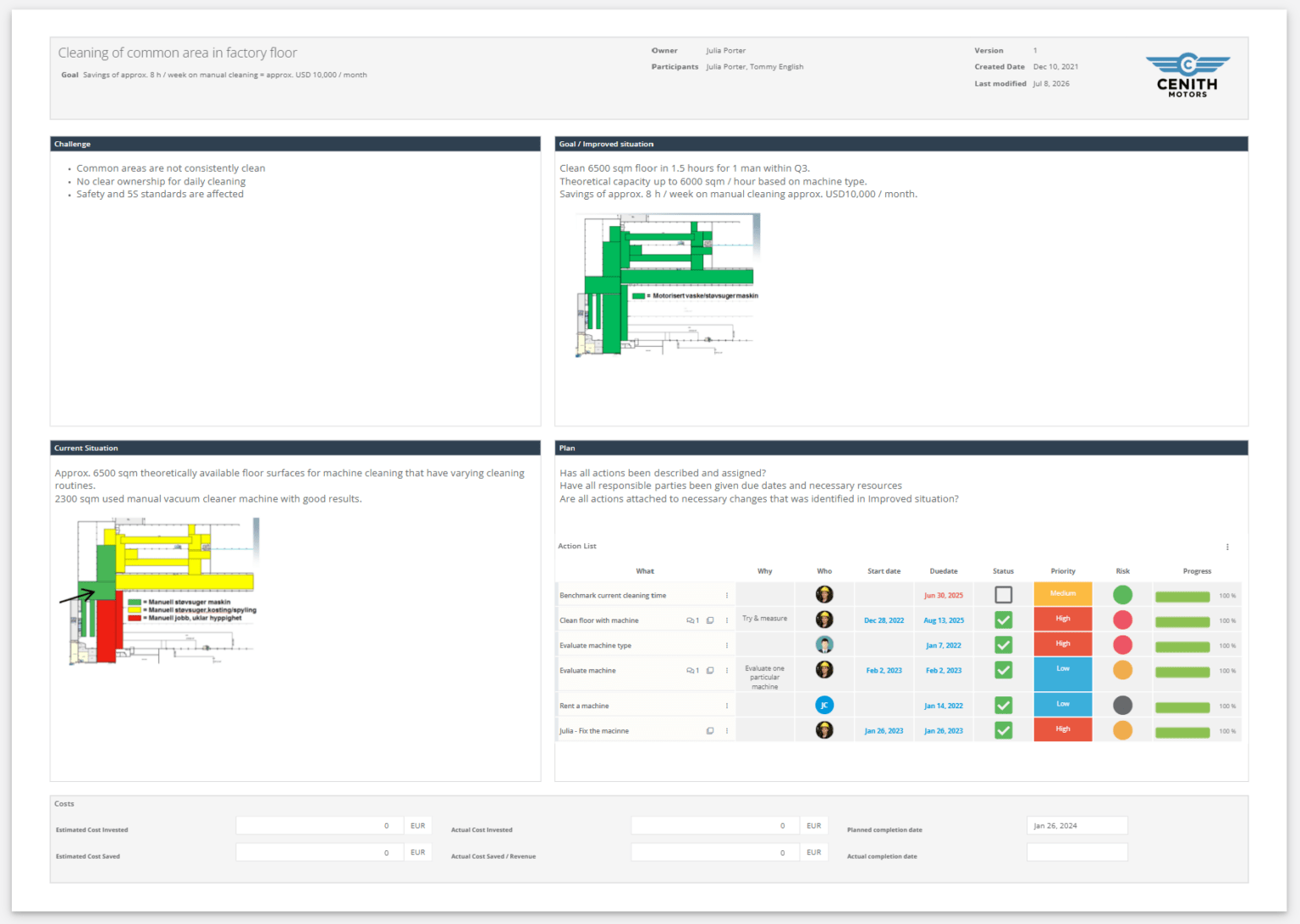
For example, DigiLEAN enables teams to manage root cause analysis within their daily management process by using an A3 problem-solving tool.
| A3 Stage | Purpose |
|---|---|
| Define the Problem | Describe the issue using facts and data |
| Analyze the Cause | Identify and validate root causes |
| Implement Actions | Assign and complete corrective actions |
| Verify Results | Confirm the problem does not return over time |
| Standardize Learning | Update processes and share best practices |
By combining root cause analysis, action management, and follow-up in a structured process, manufacturers can improve problem-solving consistency and prevent recurring issues.
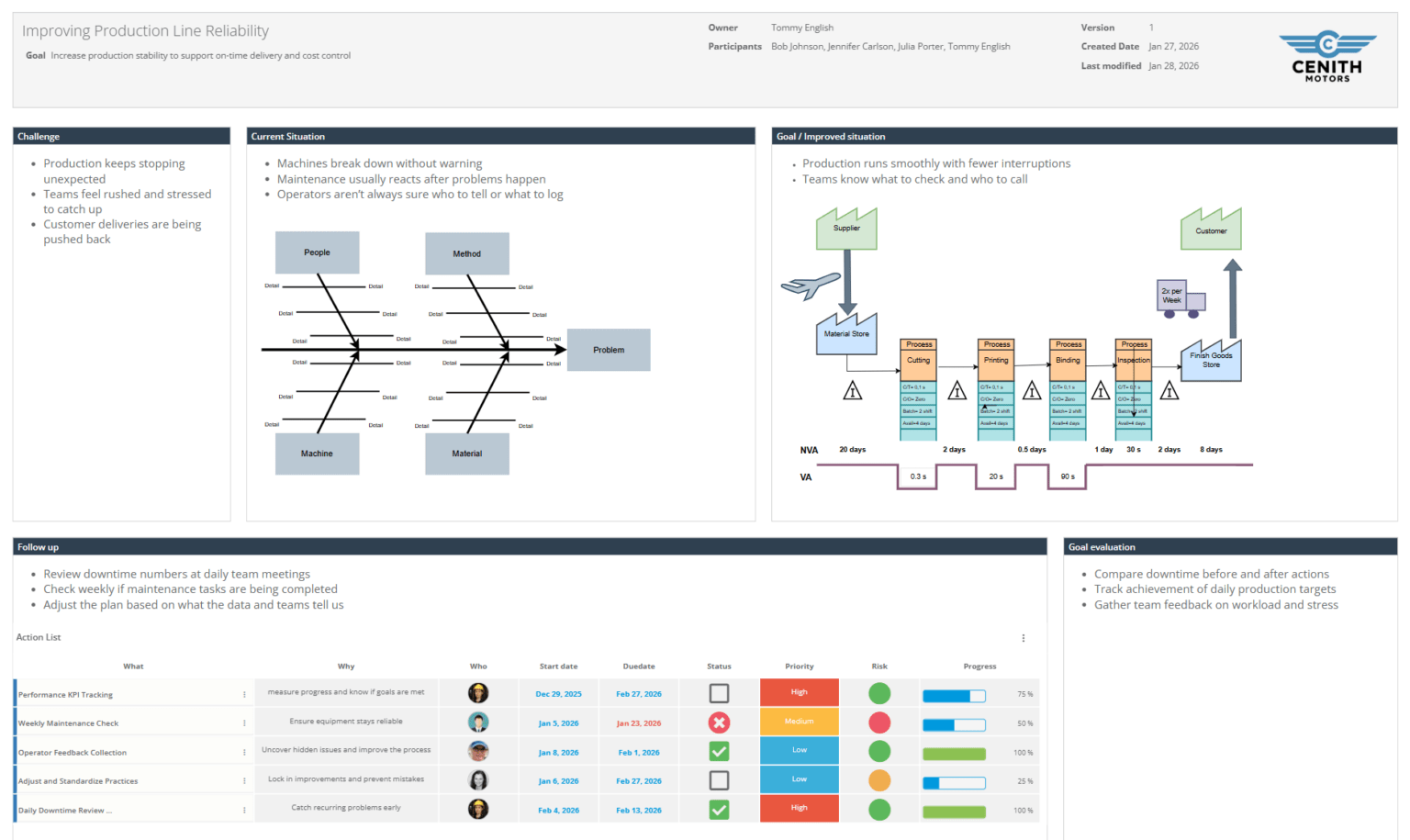
By keeping the entire RCA process in one system, teams gain better visibility into problems, ensure actions are completed, and build a repository of improvement knowledge that supports continuous improvement across the organization.
Root Cause Analysis is one of the most valuable problem-solving capabilities in manufacturing. By identifying and eliminating the true causes of operational issues, manufacturers can reduce downtime, improve quality, increase productivity, and strengthen continuous improvement efforts.
The key is consistency. Use structured methods such as the 5 Whys, Fishbone Diagrams, and Pareto Analysis, verify findings with data, and ensure corrective actions are tracked to completion. When supported by digital Lean systems, RCA becomes more transparent, scalable, and effective across the organization.
Simple issues may take a few hours to investigate, while complex cross-functional problems can require several days or weeks. The effort should match the business impact of the issue.
The root cause is the underlying reason the problem occurred. A corrective action is the step taken to eliminate that cause and prevent recurrence.
A cross-functional team typically produces the best results. Operators, supervisors, maintenance personnel, quality engineers, and process owners often contribute valuable insights.
A root cause is considered validated when evidence supports it and removing it prevents the problem from recurring.
No. Prioritize RCA for recurring, costly, safety-related, or strategically important problems. Minor one-time issues may only require basic troubleshooting.
The most common reason is lack of follow-through. Teams identify causes but fail to implement, track, and verify corrective actions consistently.
You can watch DigiLEAN intro video to learn more, book a demo to walk through the workflow with an expert, or see the platform live by starting a free trial and exploring it yourself.