Most plants are good at spotting problems. They lose time between spotting a problem and getting the right people working on it.
Digital daily management means running your daily routine on shared digital boards instead of whiteboards, emails and spreadsheets. That routine is tracking performance, logging issues and following up actions. It won’t solve problems for you. What it gives you is a structure for problem solving that holds from one shift to the next.
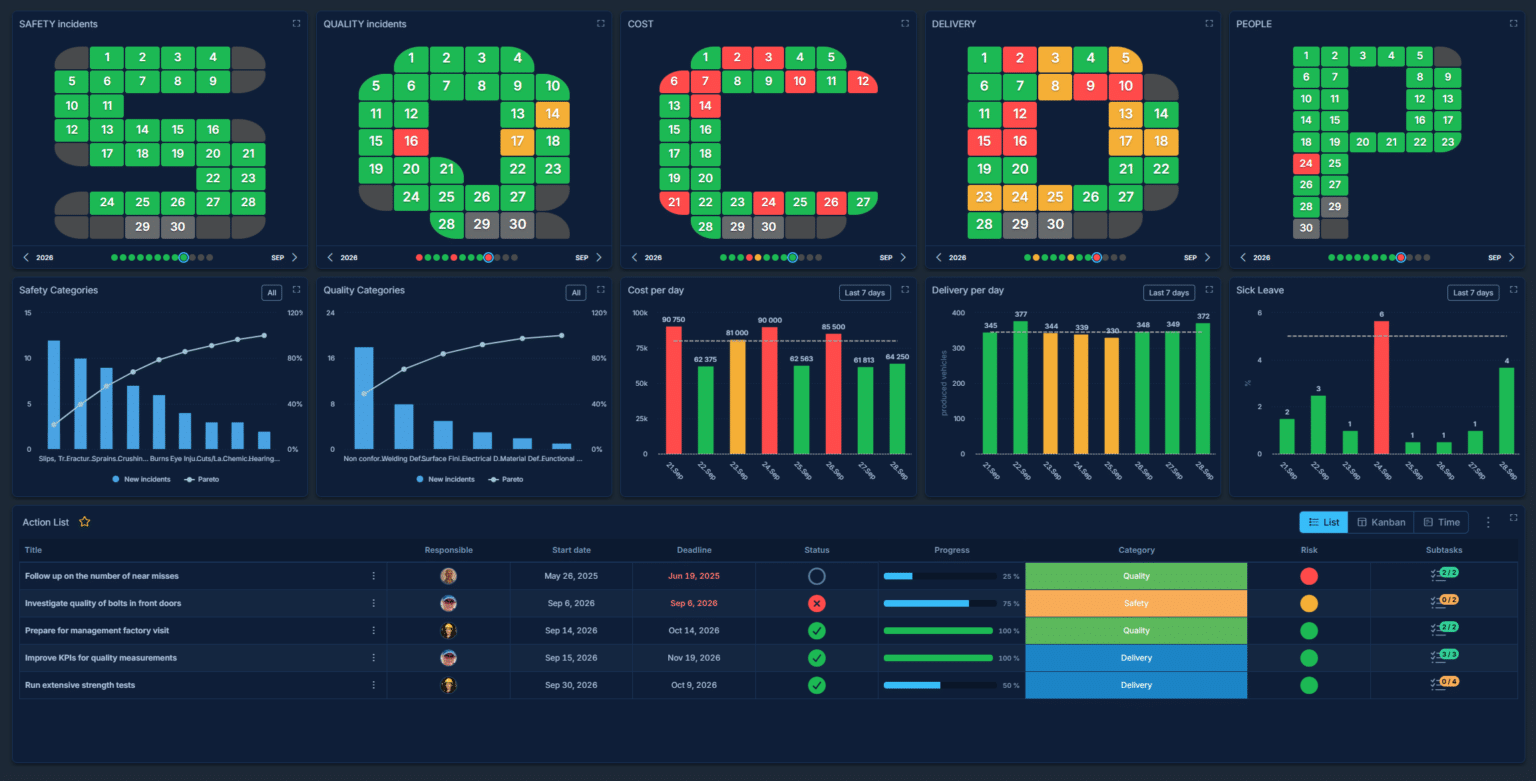
Many deviations are found long after they happen: at shift handover, in the weekly production meeting, or when the target is already missed.
When output is tracked on a daily management board during the shift, the team sees the gap at nine, not at three. The issue gets logged where everyone looks, and it comes up in the next tier meeting.
That sounds like a small change. In practice it is the difference between adjusting the plan before lunch and explaining a missed target afterwards.
The team closest to the work can fix some problems themselves. Others need help from maintenance, logistics, quality or plant management. When escalation runs on email or a word in the corridor, issues sit. Nobody can see that they are still open, so nobody acts.
With tiered escalation, an issue the team can’t solve moves up to the next tier meeting with its history attached. It stays visible at that level until someone owns it and closes it. The plant manager doesn’t have to chase status, because the open issues are already on the board.
This is also what lets daily management scale beyond one team.
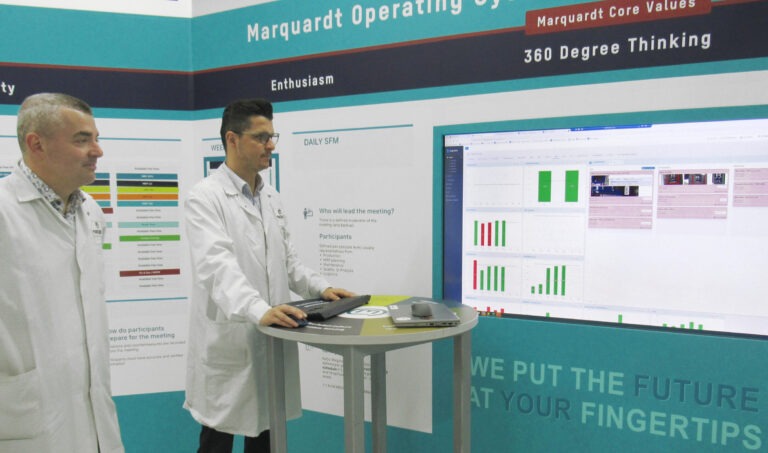
Problem solving slows down when every department has its own version of what happened.
Production sees downtime. Maintenance sees a worn bearing. Quality sees scrap. They are all right, and they are all talking about the same problem.
When the issue, its history and the actions sit on one board, the meeting can start from what is already known. The time goes to the next step, not to agreeing on what happened.
Take a packaging fault that comes back every few shifts. If production, maintenance and quality look at the same board, they can see when it happened, what was tried last time and what is still open. Then they decide. Without that, the same discussion starts over every time.
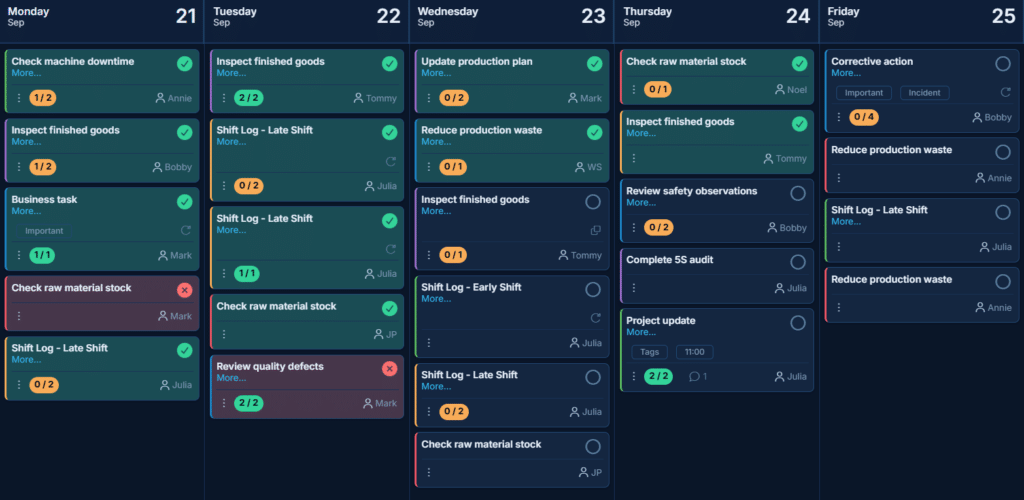
Recurring issues often come back because the fix stayed on one shift or in one meeting. The night shift solves it, and the day shift never hears about it.
A digital board keeps the issue, the actions and the outcome together. The next time the problem appears, you start from the last fix instead of from scratch. Over time you get fewer repeat investigations.
Digital daily management doesn’t replace problem-solving methods like 5 Whys or A3. It feeds them.
Daily management is where an issue gets spotted, owned and followed up. When an issue is too big to handle on the board, it becomes an A3. That A3 then starts from a logged issue with its history, not from a vague memory of last week.
To me, that is the real gain. Better methods help less than getting problems into them early, with the facts attached.
If you are still running daily management on whiteboards and Excel, read why you should stop using spreadsheets as lean boards.
Root cause analysis investigates why a problem happened. Digital daily management is the daily routine that catches the issue, escalates it and follows up the actions.
No. Quality, maintenance, logistics, engineering and leadership can all take part in the same daily meetings and boards.
Agree on one way to capture issues, assign an owner and review progress in the daily meeting. The tool comes after the routine. Read more about lean daily management.
You can watch DigiLEAN intro video to learn more, book a demo to walk through the workflow with an expert, or see the platform live by starting a free trial and exploring it yourself.