We’ve all heard about companies implementing lean in terms of projects or lean programs. To me, this is the first sign of why lean fail.
The management has been running the company for ages, and it’s doing OK. But to ensure they survive in the future, they need to improve the results and build a stronger financial foundation. They decide to implement lean to reduce waste, make improvements and the organization more efficient.
What happens is they hire a lean manager given the task to establish a lean- and continuous improvement practice with clear goals for cost reduction and increased efficiency. This initiative is often managed as a project or a lean program with a start and end date.
This decision can be crucial for the business. As between 50% – 90% of lean implementations fail, this can cause a big impact on some businesses. It cost them time, money and the confidence to do it again.
In many organizations, individual divisions or departments has a high level of autonomy. This means they can control much of their ways of working.
When a division or department decide to establish their own lean practice without the full engagement of the corporate management, the initiative tends to die or prove unable to sustain the practice.
Companies have been fighting to get traction with their lean implementation for a decade, going nowhere until a new member of the executive management was supportive of the idea. All of a sudden, the 10-year long local initiative bloomed into a corporate standard.
Don’t get me wrong. Becoming a lean organization is not an easy task. And when I say “becoming a lean organization”, I’ve chosen my words carefully. You are not implementing lean, but changing a whole organization from top to bottom.
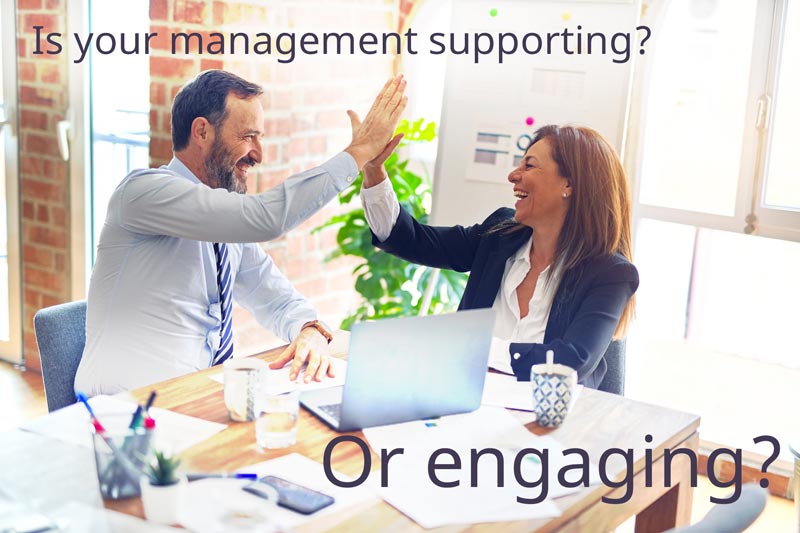
Most failed lean implementations have the upper management’s support, but they are lacking the engagement. It’s easy to tell someone to change, but not so easy to make a change yourself.
To create a lean organization is all about creating a lean culture. We have heard terminology such as lean thinking, design thinking, learning organizations, people first, customer’s voice. These are all good descriptions of values that build a lean culture.
Read our other blog articles on lean:
5 Principles of Lean
Lean Thinking
Lean and Common Sense
A lot of companies study the lean methodologies from Toyota and tend to copy their practice. If it works for them, it will work for us.
WRONG!
Toyota’s way of practice is subject for constant change and improvements. It’s Toyota’s leadership and culture you need to copy, not their tools, methodologies and practice.
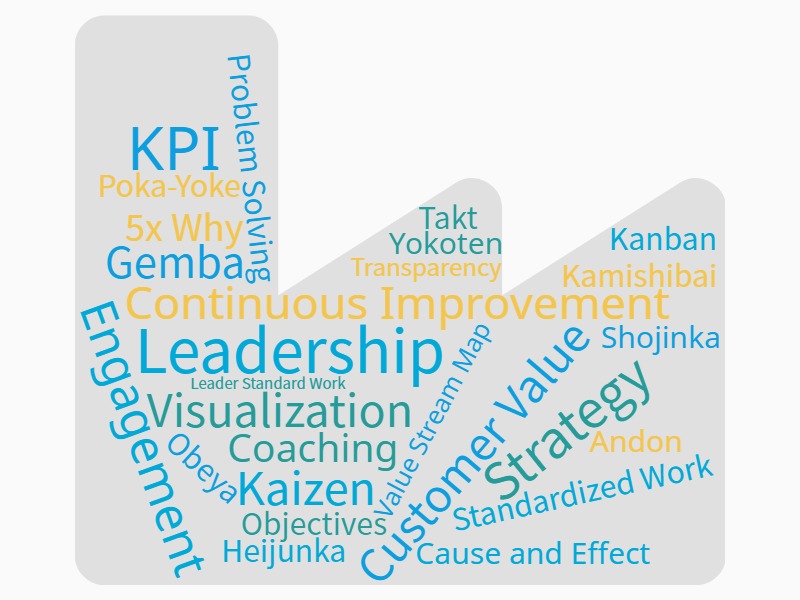
The first and uppermost success factor is management engagement. We’re talking about executive management actively participating in the lean change process, investing in training and coaching their employees. It must not be considered a project or “just an initiative”, it’s a permanent change in the way of working that requires daily attention.
5x Why is a work method to help understand the root cause of problems. In the process, it’s imperative that the leadership is able to show respect for the people and not playing the blame-game. The focus shall be to create a learning organization where you always strive to achieve a higher level of learning when problems occur.
All employees must understand how the business creates value for their customers. This is the foundation of lean thinking and essential to enable frontline workers to become problem solvers.
Crate a value stream map. It’s helpful to visualize and benchmark your processes in order to identify the real value creating activities and subsequently the bottlenecks and wastes.
Use strategy deployment (Hoshin Kanri) to operationalize your strategies. Cascade and break down objectives to individual team goals and respective KPIs. This enables the company to deploy the strategy across the whole organizations and provide relevant and tangible goals for each team.
When the strategies and goals are defined, it enables teams to prioritize and implement improvements more accurately when they are related to strategic objectives.
Perform Gemba walks. This is a manager engagement activity where they take a round in the production area or where the value creating activities happen. The intension is to see with their own eyes, talk to the frontline workers to identify, understand and learn about challenges and improvement potentials. Observations shall be recorded and followed up and will act as a trust-building activity between the frontline workers and management.
Add transparency with visualization. Visualize goals, performance, issues, activities and establish a daily management system. As mentioned, lean requires daily attention, so having a daily visual management system will help on multiple dimensions. The teams can work together in short interval meetings to discuss problems and enable problem solving quickly. What is A3 problem solving?
Capture improvement ideas and collectively make priorities within the teams. The focus is on customer value and consensus builds trust in the processes. All ideas shall be considered and feedback given to the creator. Having a system with transparency on the team level will more or less automate this and reduce the leaders workload.
Establish Leader’s Standard Work. This is a great tool to help leaders break the cycle of working ad-hoc, and focus on activities that your organization depend on.
There are dusins of other tools, processes and methodologies from the “lean toolbox”.
Not all of these are equally relevant for all organizations, but following the above tips will take you a long way into a successful lean implementation.