Most manufacturers focus on visible costs such as downtime, scrap, and rework. But the biggest losses often come from problems that keep coming back.
Over time, recurring problems create hidden costs through lost productivity, excessive firefighting, delayed decisions, and frustrated teams.
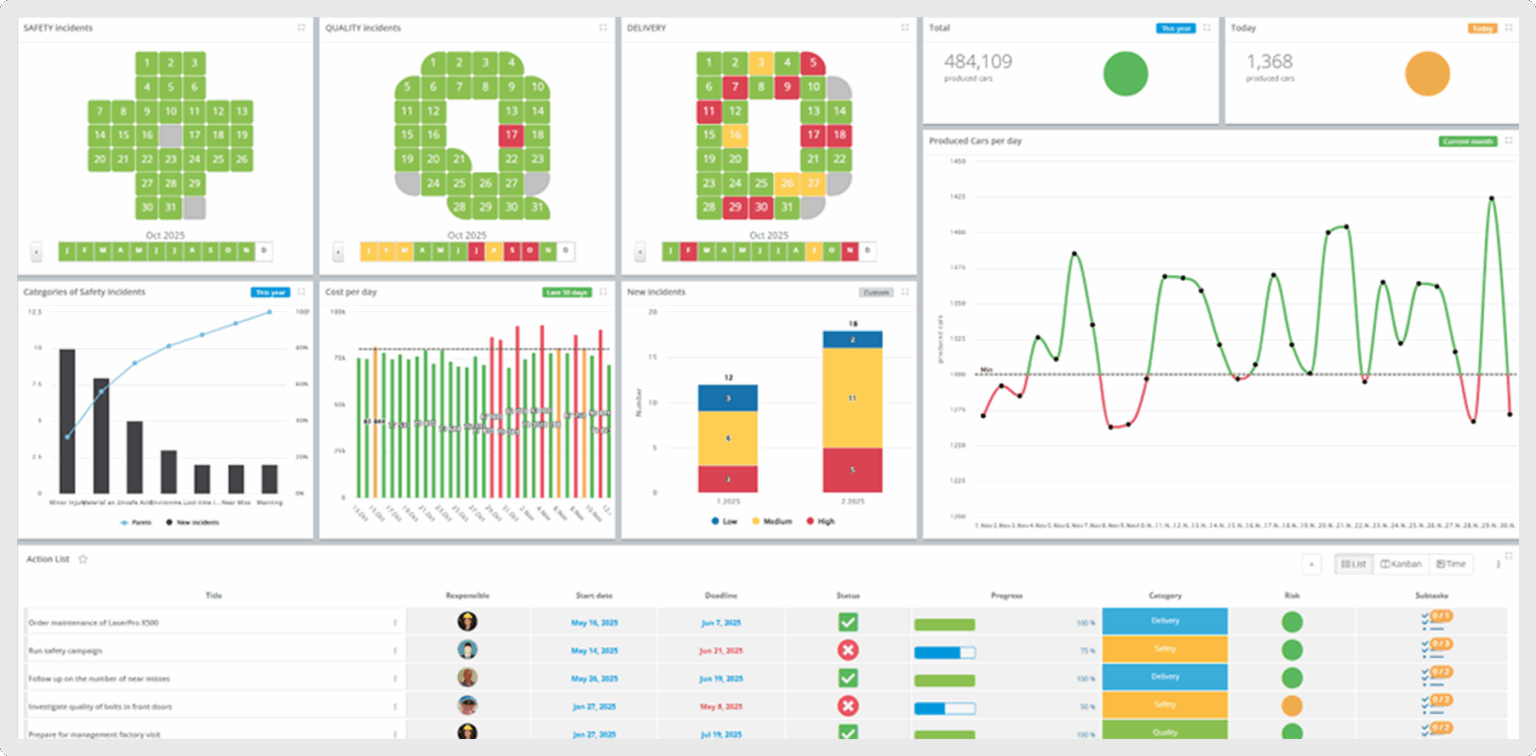
Poor problem solving often does not look like failure at first. In many factories, it looks like people “getting things done.”
A machine fault gets restarted. A quality issue is reworked. A material shortage is worked around.
The immediate issue is fixed, but the root cause remains.
These actions may keep production moving in the short term, but they do not remove the root cause. Over time, the organization becomes skilled at reacting instead of improving.
| Sign | What it looks like in daily operations | Hidden cost |
|---|---|---|
| Recurring issues | The same deviation appears every week | Lost capacity and repeated disruption |
| No clear ownership | Problems are discussed, but no one is assigned to solve them | Slow follow-up and weak accountability |
| Symptoms are fixed, not causes | Teams restart equipment or rework products without deeper investigation | Problems return and become normalized |
| Poor escalation | Operators report issues, but they do not reach the right support function | Delayed decisions and longer downtime |
| No history of previous actions | Teams cannot see what was tried before | Repeated work and wasted improvement effort |
| Too many disconnected tools | Notes, whiteboards, Excel files, and emails are used separately | Poor visibility and lost information |
The most damaging part is that poor problem solving often becomes accepted as “how we work here.”
Some costs are easy to see. If a line is down for two hours, the lost production is visible. If a batch must be scrapped, the material loss is measurable. If a product must be reworked, labor hours are consumed.
But even visible costs are often underreported because they are treated as isolated incidents.
| Problem | Immediate response | What happens if root cause is not solved |
|---|---|---|
| Sensor stops the line several times per shift | Operator resets machine | Lost production time continues daily |
| Label misalignment causes minor defects | Defective units are reworked | Quality losses become routine |
| Missing spare part delays maintenance | Temporary workaround is used | Future repairs take longer |
| Cleaning standard is unclear | Each shift does it differently | Variation creates repeat issues |
The danger is that teams become very good at responding quickly, but not necessarily at learning systematically.
The hidden costs of poor problem solving are often cultural and organizational.
This affects the entire daily management system.
| Hidden cost | Impact on the plant |
|---|---|
| Firefighting becomes normal | Leaders spend more time reacting than improving |
| Meetings lose value | Teams discuss the same issues repeatedly without closure |
| Trust decreases | Operators stop believing that reporting problems leads to action |
| Improvement work slows down | Continuous improvement teams spend time collecting information instead of solving problems |
| Priorities become unclear | Urgent issues crowd out important root cause work |
| Knowledge is lost | Lessons from previous problems are not captured or reused |
A factory can have strong production expertise and still struggle if problem solving is not visible, structured, and followed up.
Recurring problems usually come from gaps in the problem-solving process, not from lack of effort.
Most shop floor teams are busy, experienced, and committed. The challenge is that daily operations move fast. Without a structured way to capture, prioritize, assign, solve, and learn from problems, even good teams fall back into short-term fixes.
| Reason | Practical explanation |
|---|---|
| The problem is not clearly defined | “Machine issue” is too vague to solve effectively |
| Data is missing | Teams do not know when, where, and how often the issue occurs |
| Ownership is unclear | Several people are involved, but no one is accountable |
| Escalation is inconsistent | The right support team is involved too late |
| Actions are not followed up | Countermeasures are agreed but not checked |
| Lessons are not standardized | A solved problem in one area is not shared with others |
Good problem solving does not require a complex process. It requires discipline, visibility, and follow-through.
A practical shop floor problem-solving process should answer six simple questions:
This can be supported through Lean methods such as 5 Why, A3 thinking, PDCA, daily management boards, and SQCDP meetings. The method matters, but the daily behavior matters more.
The goal is not to create more administration. The goal is to make problems visible early, solve them at the right level, and prevent repeat issues.
Traditional whiteboards and spreadsheets can support daily management, but they often struggle when problems need to be tracked across shifts, departments, and sites.
A digital daily management system such as DigiLEAN can help teams move from scattered problem handling to structured problem solving. The value is not only in digitizing a board. The value is in creating a shared operational memory.
| Shop floor challenge | DigiLEAN usage example | Operational benefit |
|---|---|---|
| Problems are written on local boards but not followed up | Capture deviations, actions, and improvement ideas digitally during daily meetings | Better visibility and less lost information |
| Supervisors spend time chasing updates | Assign responsible owners and due dates for actions | Clear accountability |
| Issues are repeated across shifts | Track problem history and previous countermeasures | Less repeated troubleshooting |
| Escalation is unclear | Use tiered daily management boards to move issues to the right level | Faster support from maintenance, quality, logistics, or management |
| Leaders lack overview | Use digital dashboards to see open issues, overdue actions, and recurring themes | Better prioritization |
| Improvement work is disconnected from daily operations | Link improvement ideas and actions to operational performance areas such as safety, quality, cost, delivery, and people | Stronger connection between daily work and continuous improvement |
The practical benefit is that problems do not disappear when the meeting ends. They remain visible until they are solved, verified, and learned from.
Imagine a production team that repeatedly finds scratches on finished components.
Traditional response
The issue is mentioned in the morning meeting. Operators inspect more carefully. Defective parts are separated. Quality is informed. After a few days, the issue appears again. The discussion restarts.
Structured digital approach with DigiLEAN
The team records the issue as a deviation on the digital board. The problem is categorized under quality. Photos and comments are added. The issue is assigned to a responsible owner. A short root cause analysis is started.
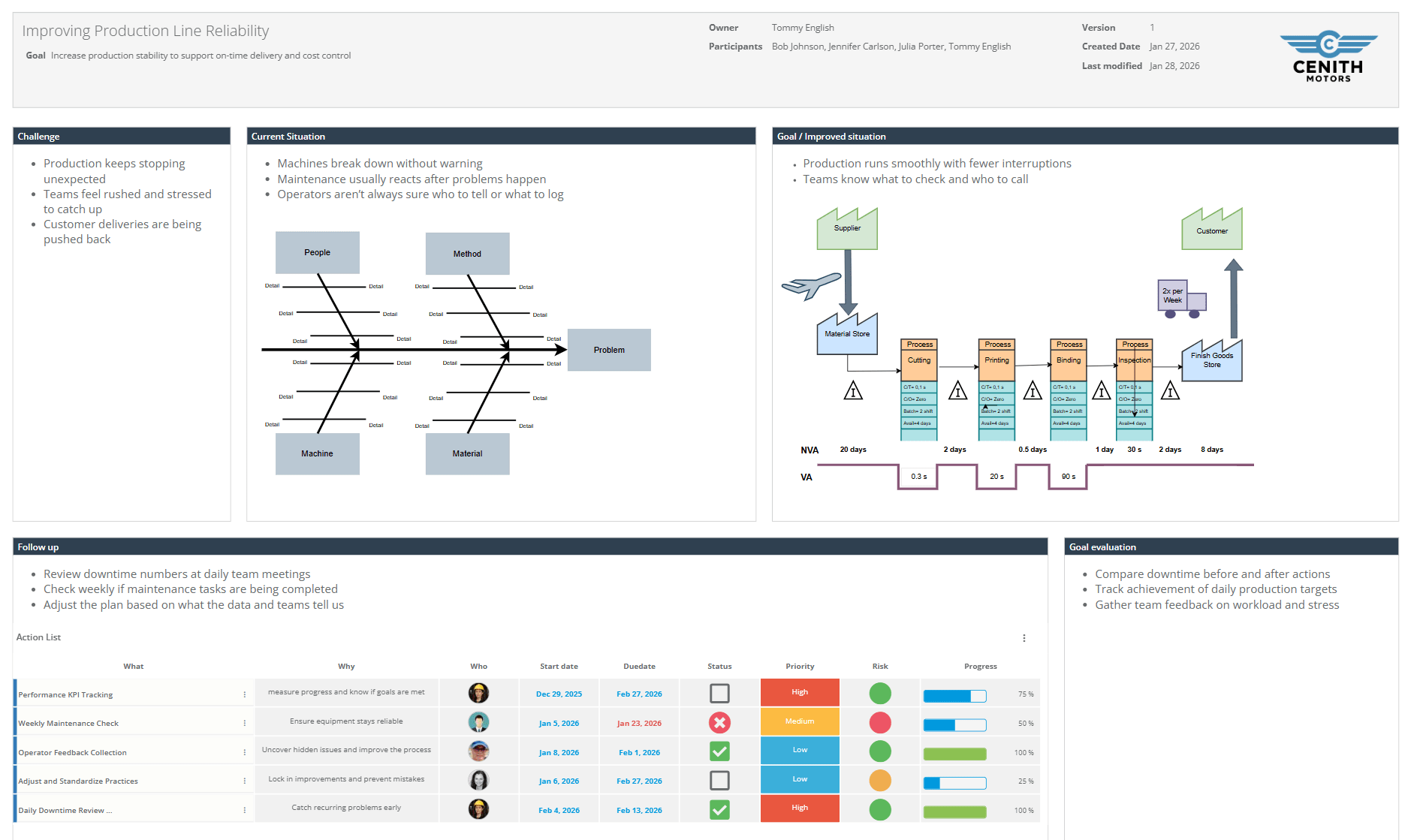
The team discovers that scratches appear after a specific handling step during shift change. A countermeasure is tested, the work standard is updated, and the action is verified after several shifts. The learning is visible to other teams that use the same handling process.
Result
The problem is not just corrected. It is understood, documented, followed up, and prevented from spreading.
If you want to improve shop floor problem solving, measure the process, not only the outcomes.
Of course, downtime, scrap, rework, customer complaints, and delivery delays matter. But those are lagging indicators. They show the result after problems have already affected performance.
To improve problem solving, leaders should also monitor whether the organization is handling issues effectively.
| Metric | What it tells you |
|---|---|
| Number of new deviations or problems raised | Whether issues are being made visible |
| Number of recurring issues | Whether root causes are being eliminated |
| Open actions by owner or department | Where follow-up may be overloaded |
| Overdue actions | Whether accountability is working |
| Average time to close problem actions | How quickly issues move from reporting to resolution |
| Problems escalated between tiers | Whether the daily management system supports flow of information |
| Verified countermeasures | Whether actions are checked for real effect |
| Improvement ideas implemented | Whether teams are turning problems into learning |
A healthy problem-solving culture does not necessarily mean fewer problems are reported at first. In many cases, it means more problems become visible because teams trust the system.
You do not need to redesign the entire operational excellence system to begin.
Start with one production area, one meeting structure, and one type of recurring problem.
A practical starting approach
The goal is to build discipline before expanding. Once the process works in one area, it can be scaled across departments and sites.
Firefighting is the immediate response needed to keep production running. Poor problem solving happens when the organization stops there and does not investigate why the problem happened or how to prevent it from returning.
No. Not every issue needs a detailed A3 or long investigation. Small issues may only need quick action. However, recurring problems, safety risks, quality defects, major downtime, and cross-functional issues should be investigated more thoroughly.
Start by cleaning up the action list. Close actions that are no longer relevant, clarify ownership for active actions, and prioritize the few that have the biggest operational impact. A shorter, actively managed list is better than a long list no one trusts.
Supervisors should respond constructively when problems are raised. If reporting leads to blame or no visible action, operators will stop sharing issues. If reporting leads to support, learning, and follow-up, participation increases.
They can in many environments, but the best approach depends on the maturity of the team and the work setting. Some factories use digital boards directly on screens in daily meetings, while others combine physical routines with digital tracking for follow-up, history, and escalation.
When problems, actions, and improvements are captured digitally, teams can build a shared history of what has been tried, what worked, and what should be standardized. This makes it easier for similar departments or sites to learn from each other instead of solving the same problem separately.
You can watch DigiLEAN intro video to learn more, book a demo to walk through the workflow with an expert, or see the platform live by starting a free trial and exploring it yourself.