Lean management has always been about creating value by removing waste – but many organizations still rely on manual tools like whiteboards, spreadsheets, and disconnected systems to run their daily improvement work.
In this article, we break down what Lean management software is, the key benefits and features, and how it is used in real operational settings – with practical examples from DigiLEAN.
Lean management software is a digital platform designed to support core Lean practices such as:
Instead of relying on physical boards or scattered tools, teams work in one shared system that reflects real-time operations.
Platforms like DigiLEAN are built specifically to support everyday Lean work – from daily meetings to structured problem solving – while reducing manual effort and improving transparency across teams.
Research consistently highlights the limitations of manual Lean systems:
Digital Lean platforms address these challenges by making data accessible, structured, and actionable in real time.
Teams gain real-time insight into performance, deviations, and priorities – enabling faster, fact-based decisions.
Ideas are not lost or forgotten. A structured system ensures improvements are captured, prioritized, and followed through.
Standardized approaches reduce variability in how problems are handled, leading to more sustainable solutions.
Less time spent updating boards, chasing information, and compiling reports – more time spent improving operations.
Information becomes accessible across teams and locations, supporting alignment and shared ownership.
Clear ownership and visibility ensure that actions are completed and improvements are sustained.
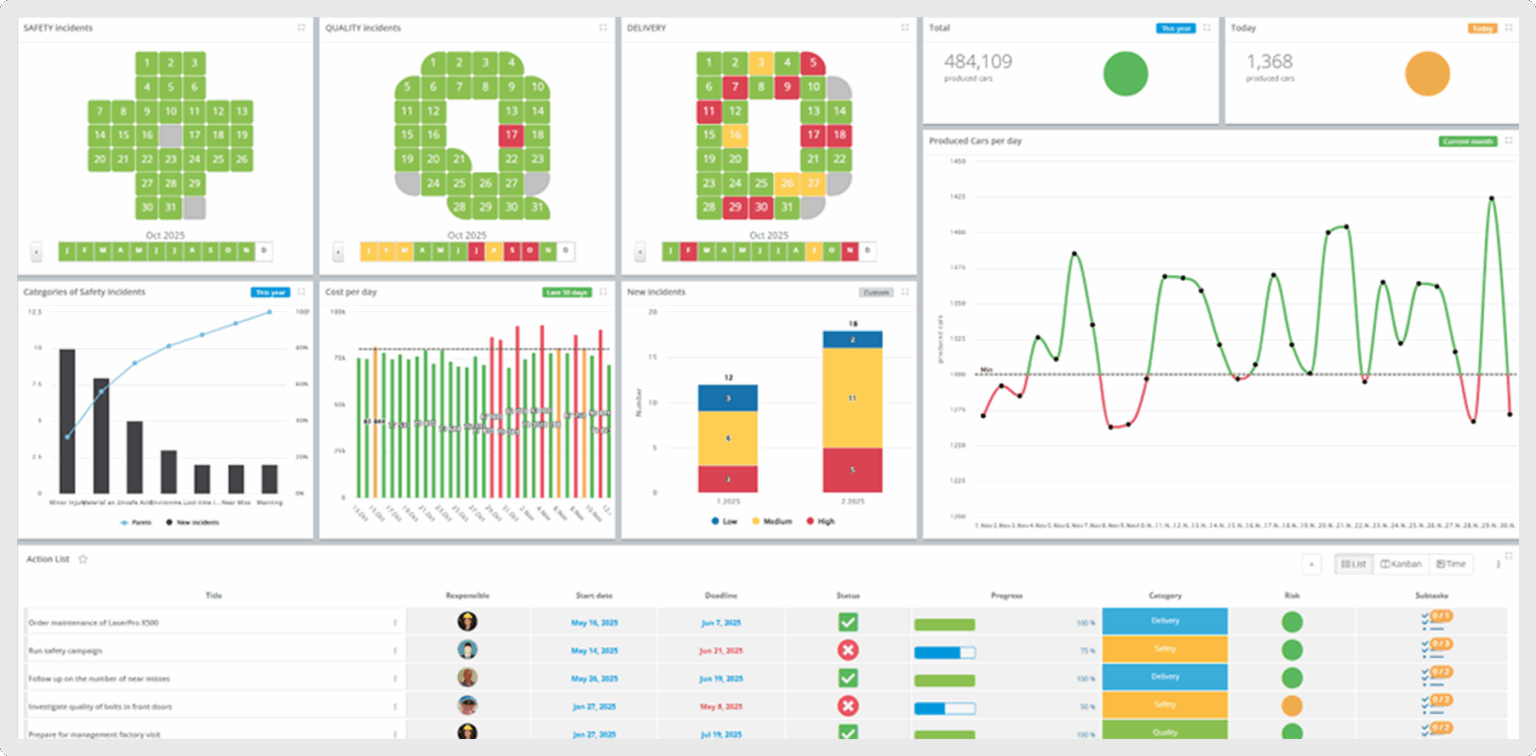
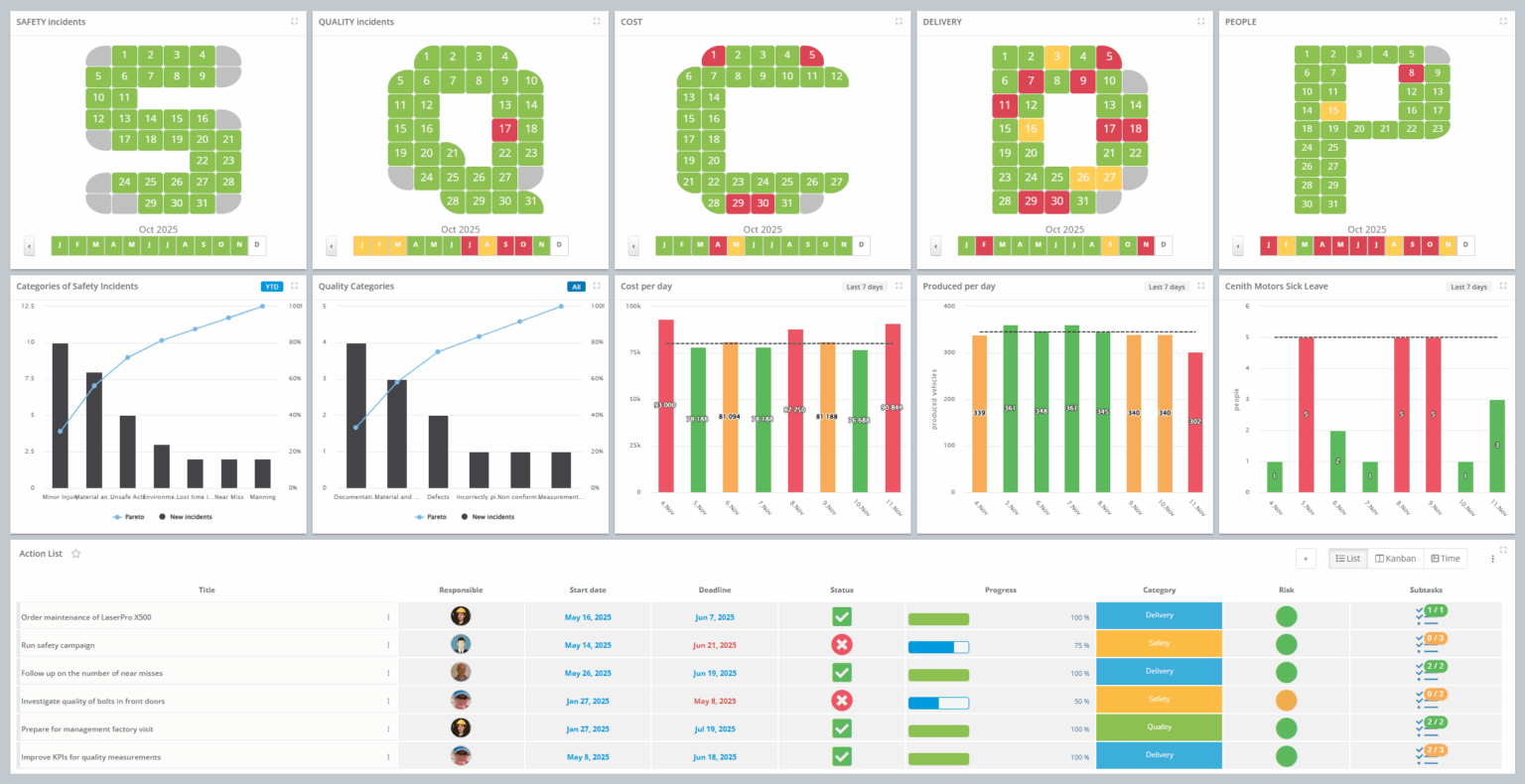
Digital boards provide instant access to KPIs, activities, and deviations.
With DigiLEAN’s Interactive Boards, teams can:
This ensures everyone works from the same, current data – not yesterday’s numbers.
Improvement work often fails due to lack of follow-up.
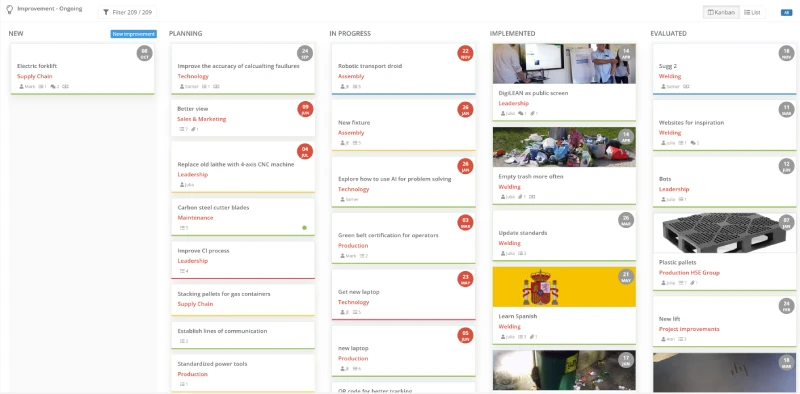
DigiLEAN’s Improvements module enables teams to:
This creates a clear flow from idea to implementation – a key success factor highlighted in Lean studies.
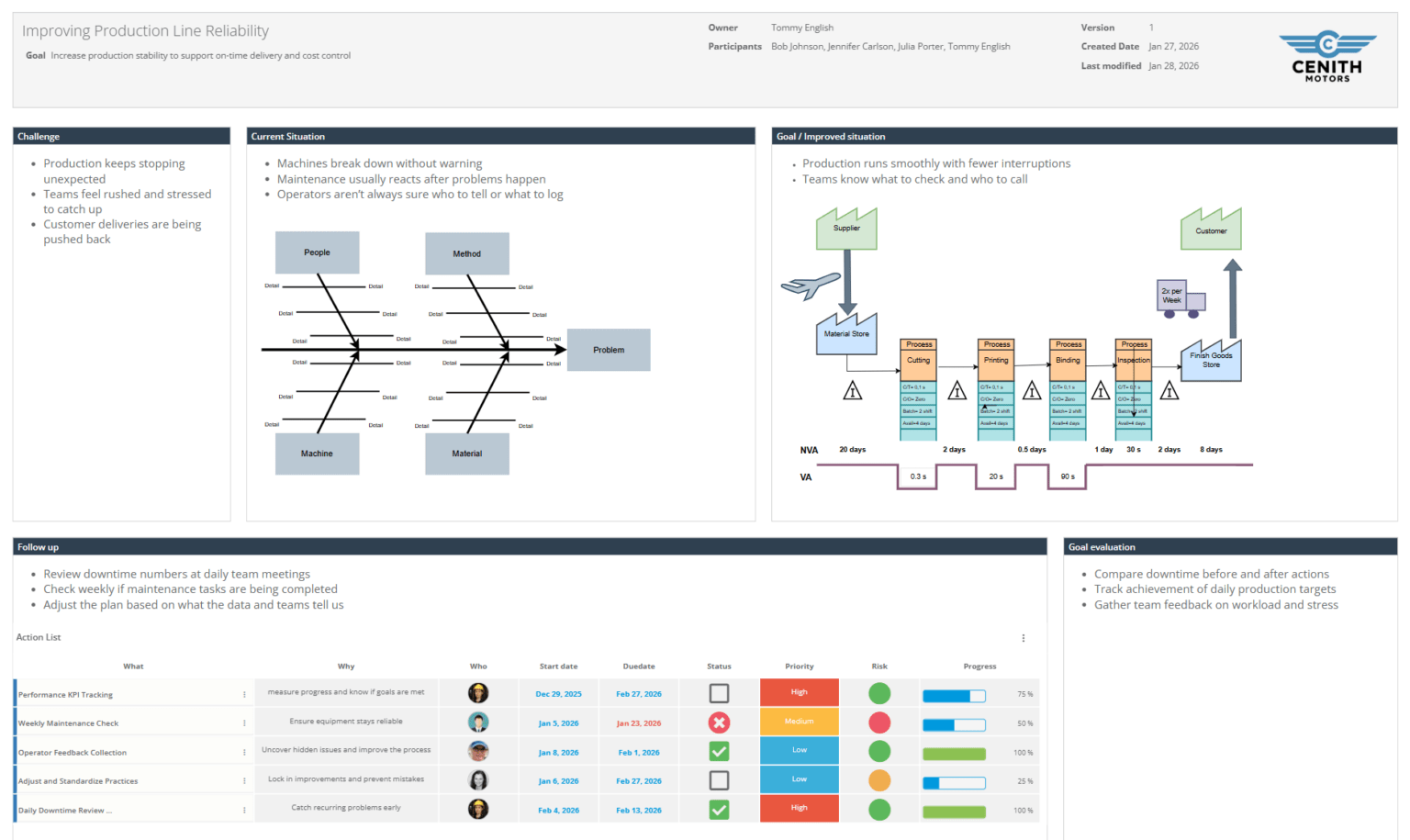
With A3 Problem Solving, DigiLEAN supports:
This aligns with Lean best practices for systematic problem solving.
Operational disruptions require fast and transparent handling.
Using DigiLEAN’s Incidents module, organizations can:
This strengthens accountability and learning from deviations.
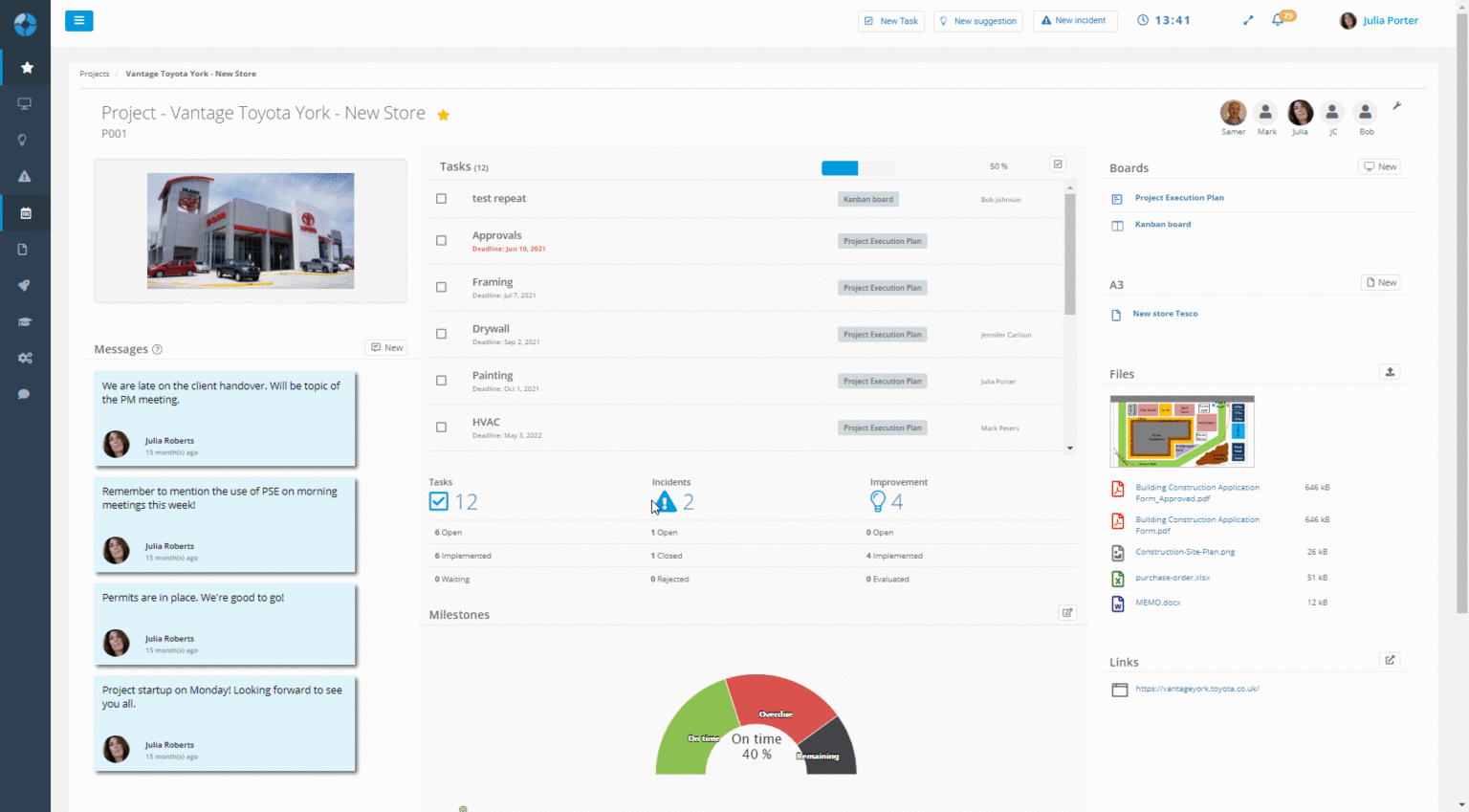
DigiLEAN offers a module for managing projects, portfolios, and strategic initiatives.
Improve alignment between daily improvements and overall organizational goals.

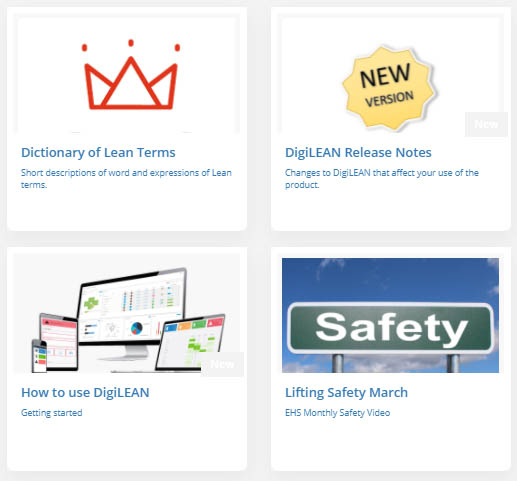
A system for creating and sharing standards, best practices, and tutorials.
Drives consistency, improves onboarding, and helps sustain improvements over time.
Mobile access to Lean workflows and operational data.
Enhances engagement, improves communication, and ensures Lean work happens where operations take place.
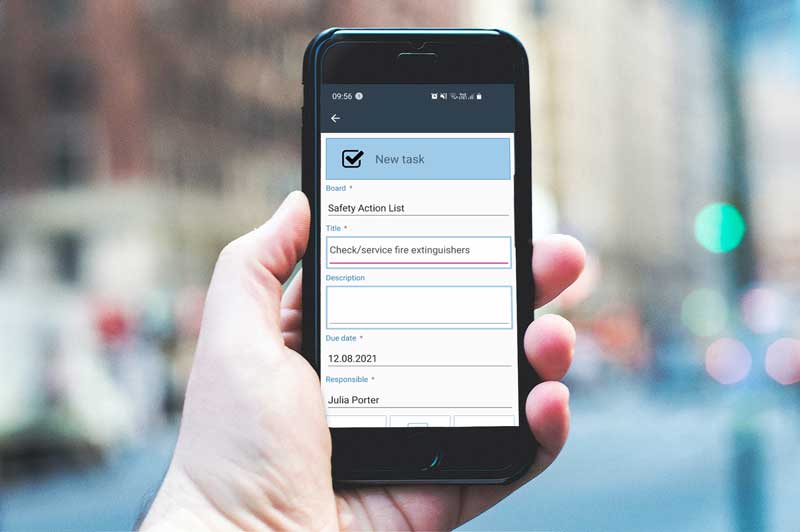
Integration capabilities that connect Lean workflows with existing systems.
Reduces information silos and ensures smooth data flow across the organization.
Context:
A mid-sized manufacturing company runs daily stand-up meetings using physical whiteboards and manually updated spreadsheets.
Challenges identified:
Solution with DigiLEAN:
The company implements Interactive Boards to digitize daily management.
What changes operationally:
Measured impact:
Why it works:
By removing manual updates and centralizing information, the system supports what Lean requires: frequent, fact-based decision-making and consistent follow-up.
Context:
A production organization handles deviations (e.g., quality issues, equipment stops, safety incidents) through paper forms, emails, or fragmented systems.
Challenges identified:
Research and operational studies consistently show that lack of structured incident tracking leads to repeated problems and lost improvement opportunities.
Solution with DigiLEAN:
The organization implements the Incidents module to standardize deviation management.
What changes operationally:
Measured impact (based on Lean and operations benchmarks):
DigiLEAN is designed specifically for Lean environments – not as a generic task or project tool.
It brings together:
…into one platform that supports daily Lean work.
The result is a more connected, transparent, and efficient way to run continuous improvement.
No. While Lean originates from manufacturing, Lean management software like DigiLEAN is used across industries – including logistics, healthcare, and service organizations – wherever structured improvement and operational visibility are needed.
Digital boards ensure that:
This makes meetings more efficient and actionable.
The main challenge is often change management – not technology. Teams need to adapt their routines, but digital tools like DigiLEAN are designed to mirror familiar Lean practices, making the transition smoother.
Yes. With mobile access and simple interfaces, platforms like DigiLEAN enable shop-floor teams to:
Sustainability comes from:
DigiLEAN supports all three by making improvement work visible, trackable, and integrated into daily operations.
You can explore DigiLEAN intro video to see platform in action, book a demo to walk through the workflow with an expert, or see Lean management software live by starting a free trial and exploring the platform yourself.