A daily management board is a core element of Lean operations. When designed well, it makes performance visible, structures daily meetings, and ensures problems and actions are followed up – without relying on manual whiteboards or spreadsheets.
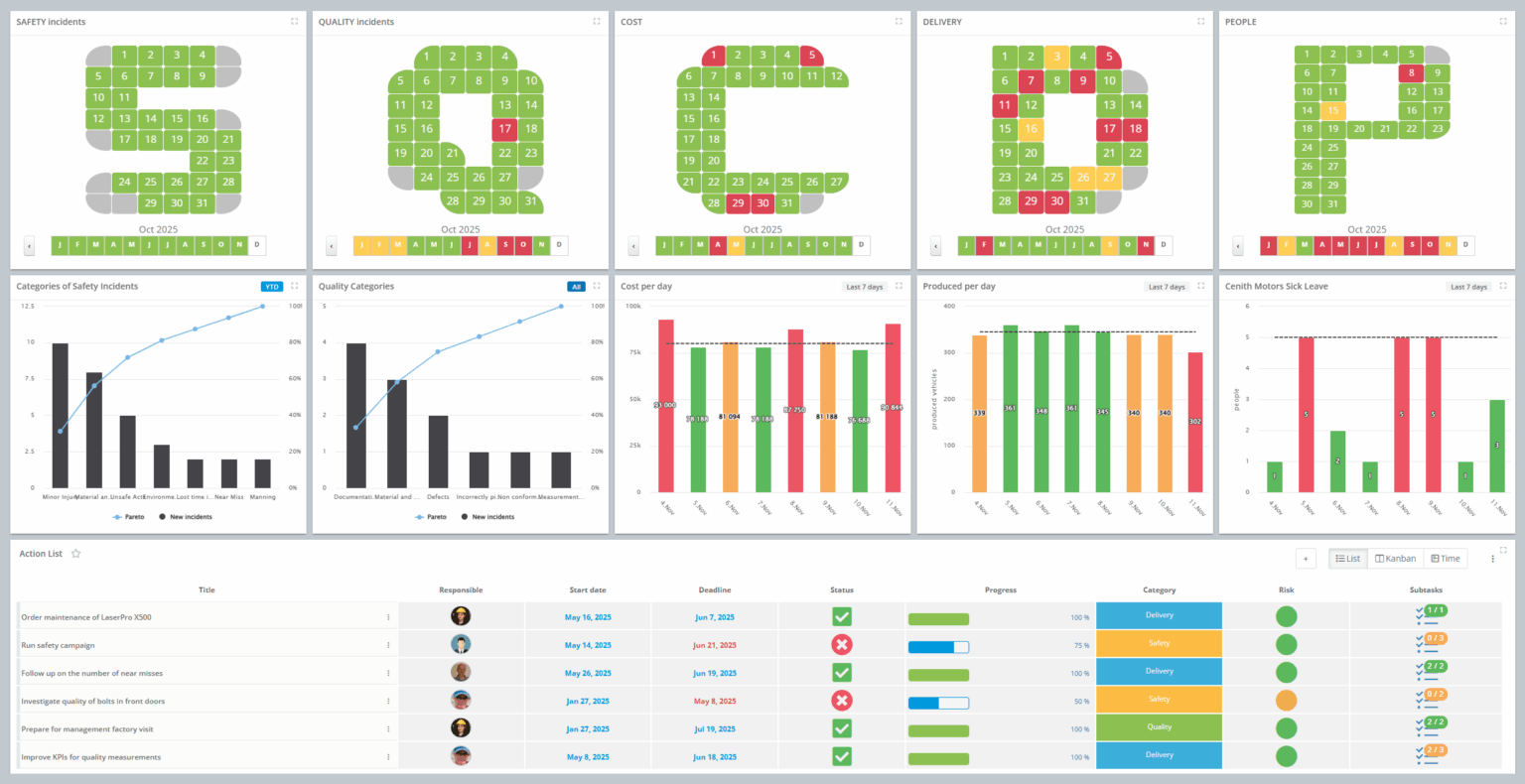
Lean visual management helps teams understand performance instantly – at the place where work happens.
An effective lean visual management board ensures that:
According to guidance from the Lean Enterprise Institute, visual management works when it supports fast understanding and disciplined response.
In practice, a visual management board in manufacturing is used in short, structured daily meetings to:
Lean Visual Management Board Examples from Manufacturing
Most lean visual management board examples in manufacturing follow the SQDCP logic because it reflects how production performance is managed day to day:
Each category answers a simple question: Are we performing as expected today?
If the answer is no, the deviation must be visible and discussed.
Manufacturing teams use interactive digital boards to visualize SQDCP performance in real time and link deviations directly to incidents or improvement actions, ensuring issues are not just noted but managed.
The Lean Management Board and Daily Management System Board are often used interchangeably, but they represent different levels of daily management maturity.
| Aspect | Lean Management Board | Daily Management System Board |
|---|---|---|
| Primary purpose | Make production performance visible | Manage performance and drive problem resolution |
| Main focus | What happened | What happened, why, and what we are doing about it |
| Typical content | KPIs, charts, targets vs. actuals | KPIs, deviations, root causes, actions |
| Problem handling | Problems are noted | Problems are analyzed and acted on |
| Action tracking | Often informal or external | Built-in, visible, and structured |
| Follow-up | Depends on individual discipline | Embedded in daily routines |
| Learning over time | Limited | Systematic through A3 and improvements |
| Sustainability | Relies on manual effort | Supported by standard processes and tools |
A lean management board is a necessary starting point, but on its own it does not ensure improvement. A daily management system board closes the loop between performance, problem solving, and follow-up.
DigiLEAN supports the full daily management system by connecting production KPIs with improvements, incidents, and A3 problem solving – ensuring that deviations lead to structured actions and learning, not just discussion.
A practical daily management board focuses only on what can be influenced daily. Too many metrics reduce clarity and slow decision-making.
A strong board typically includes:
This structure ensures accountability and keeps meetings short and focused.
During daily shift meetings, supervisors update KPIs directly on the DigiLEAN digital board and create follow-up actions in the same place, eliminating parallel spreadsheets or handwritten notes.
While the structure daily management board should be standardized, content varies by function to reflect operational responsibility.
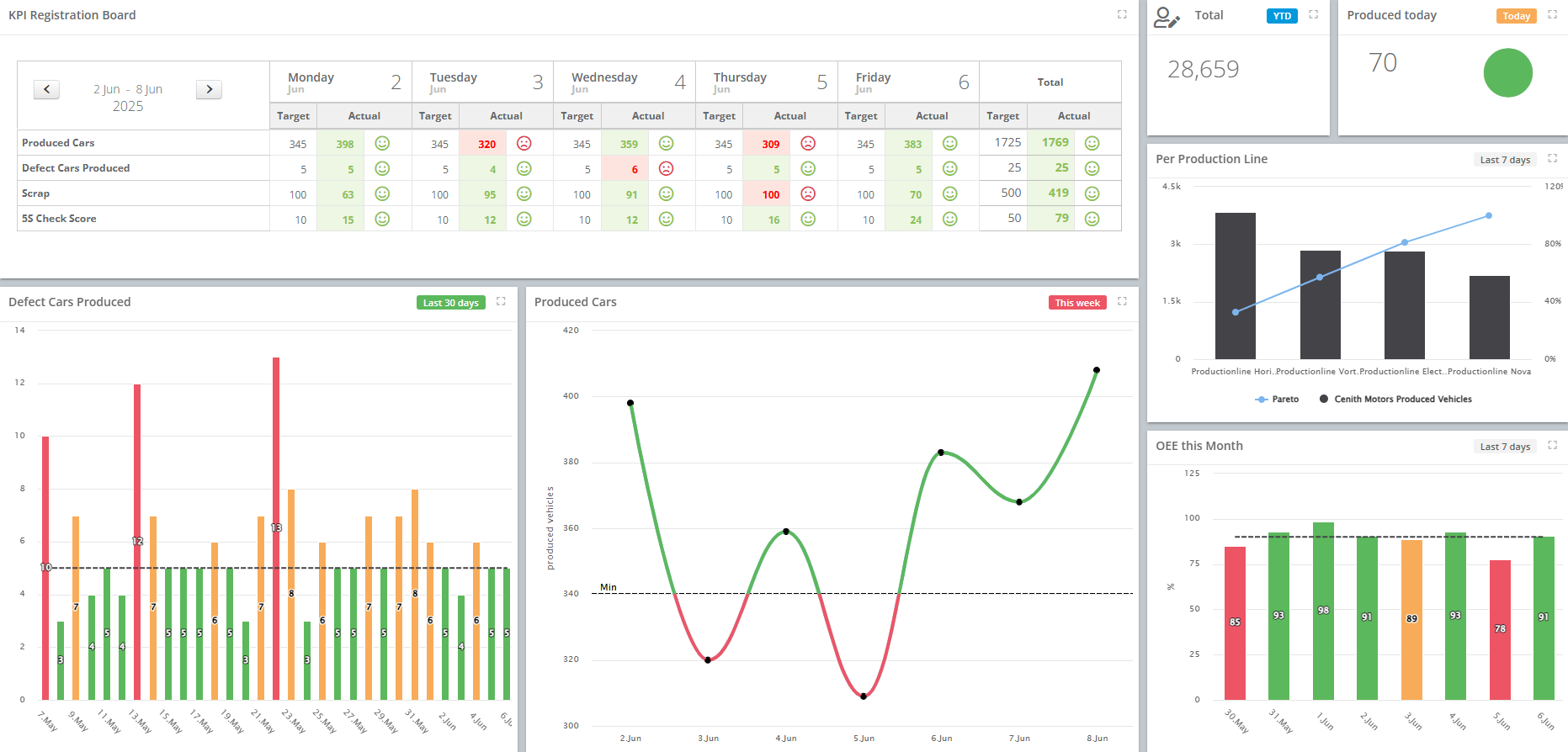
An assembly line board focuses on maintaining flow and meeting production targets. Typical content includes:
These boards are reviewed at the line, often during shift handovers. When output or quality deviates from plan, actions are assigned immediately to stabilize the process. Digital boards make it easier to update results in real time and ensure the next shift sees the same information without rewriting the board.
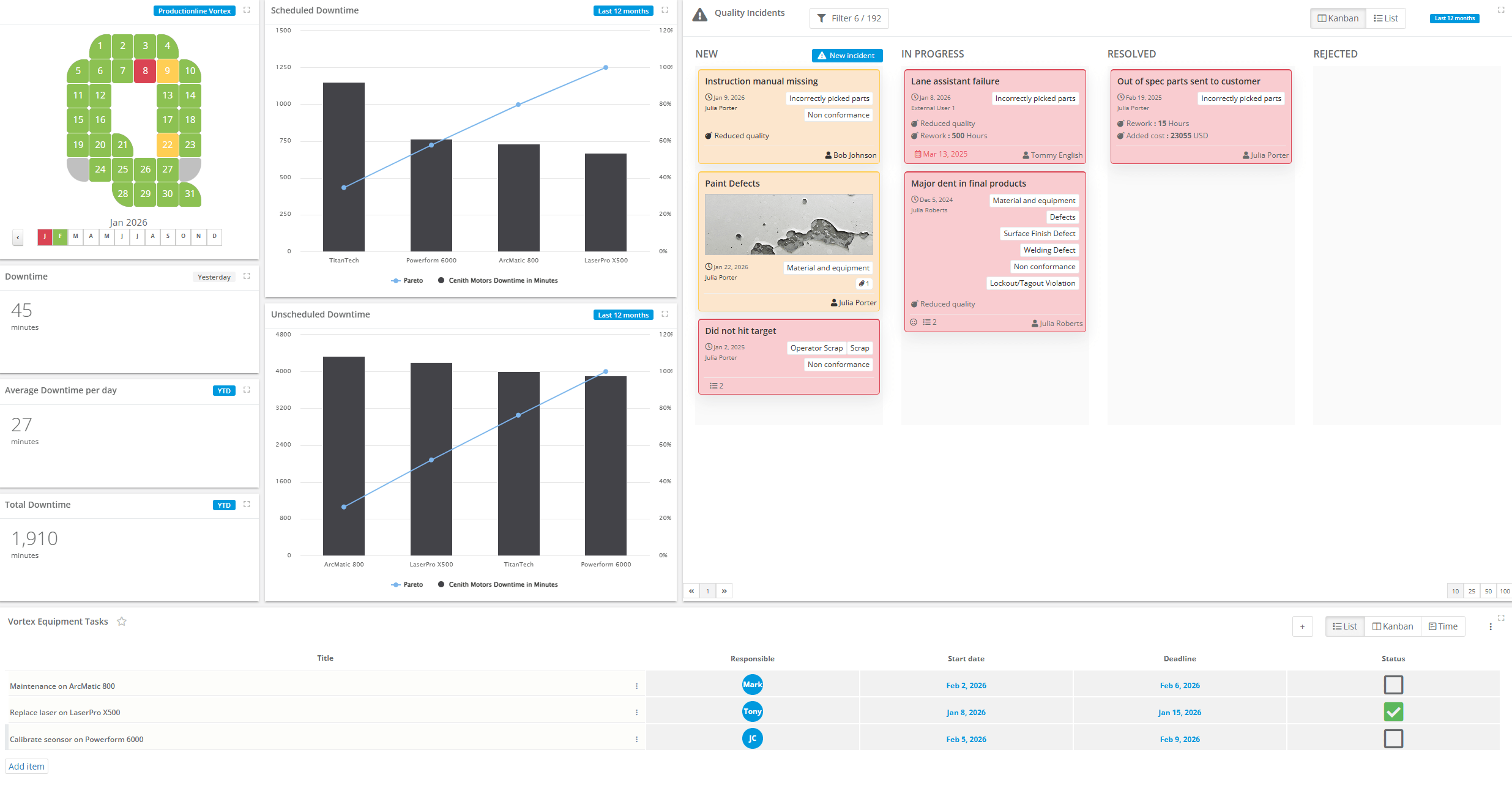
Maintenance boards support equipment reliability and fast response. They typically include:
The board helps maintenance teams prioritize daily work and highlights repeat failures that require deeper problem solving. With a digital setup, breakdowns and actions can be logged directly during the shift, making trends visible without manual data collection.
Quality boards focus on protecting the customer and stabilizing processes. Common elements include:
These boards support fast escalation when quality issues appear and ensure corrective actions are tracked to completion. Digital boards help link daily quality issues to longer-term improvement or A3 problem-solving work without managing multiple systems.
Both physical and digital boards aim to make performance visible, but they support daily management very differently.
| Aspect | Physical Daily Management Board | Digital Daily Management Board |
|---|---|---|
| Updates | Manual writing and erasing each shift | Updated directly during the shift |
| Consistency | Varies by team and individual | Standardized across teams and areas |
| Shift handover | Relies on explanations | Information remains visible and current |
| Action tracking | Often on paper or separate tools | Actions linked directly to deviations |
| History & trends | Limited or unavailable | Automatically available |
| Accessibility | Only where the board is located | Visible on screens and mobile devices |
| Maintenance effort | High manual effort | Low ongoing effort |
As manufacturing operations grow more complex, many teams move to digital boards to reduce time spent maintaining visuals and increase confidence that actions and follow-up are not lost between shifts or meetings.
DigiLEAN daily management boards help teams focus less on keeping boards up to date and more on solving problems and improving performance.
Daily management in manufacturing typically happens at multiple levels – line, area, and plant. Boards must support this structure without duplicating information.
Effective tiered design includes:
This ensures issues flow upward logically while ownership remains clear.
DigiLEAN digital boards support this naturally by allowing the same information to be reviewed at different levels, with problems and actions escalating clearly without re-entering data.
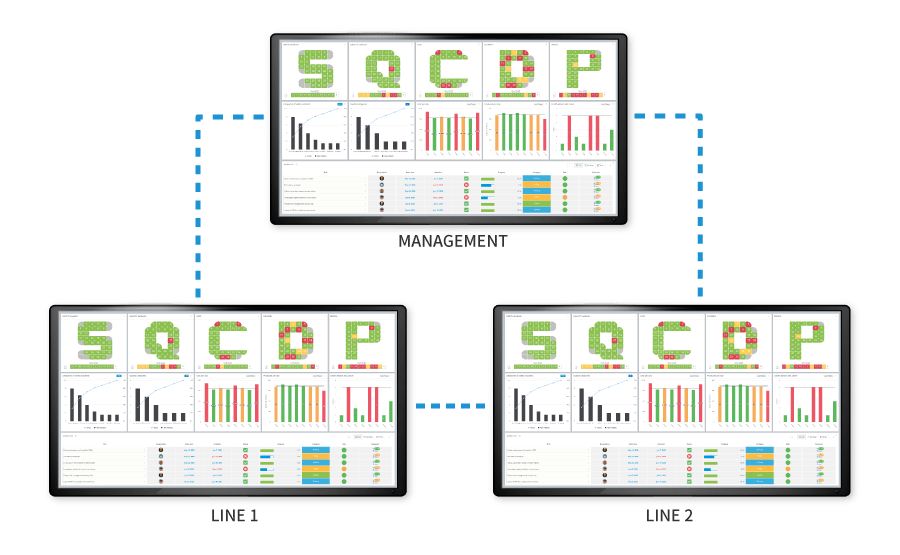
Setting up a daily management board does not require a complex rollout. The most effective boards are built simply and improved through use.
A practical way to start is to:
Many organizations start with a simple digital board and gradually connect actions to incidents, improvements, and A3 problem solving as routines mature.
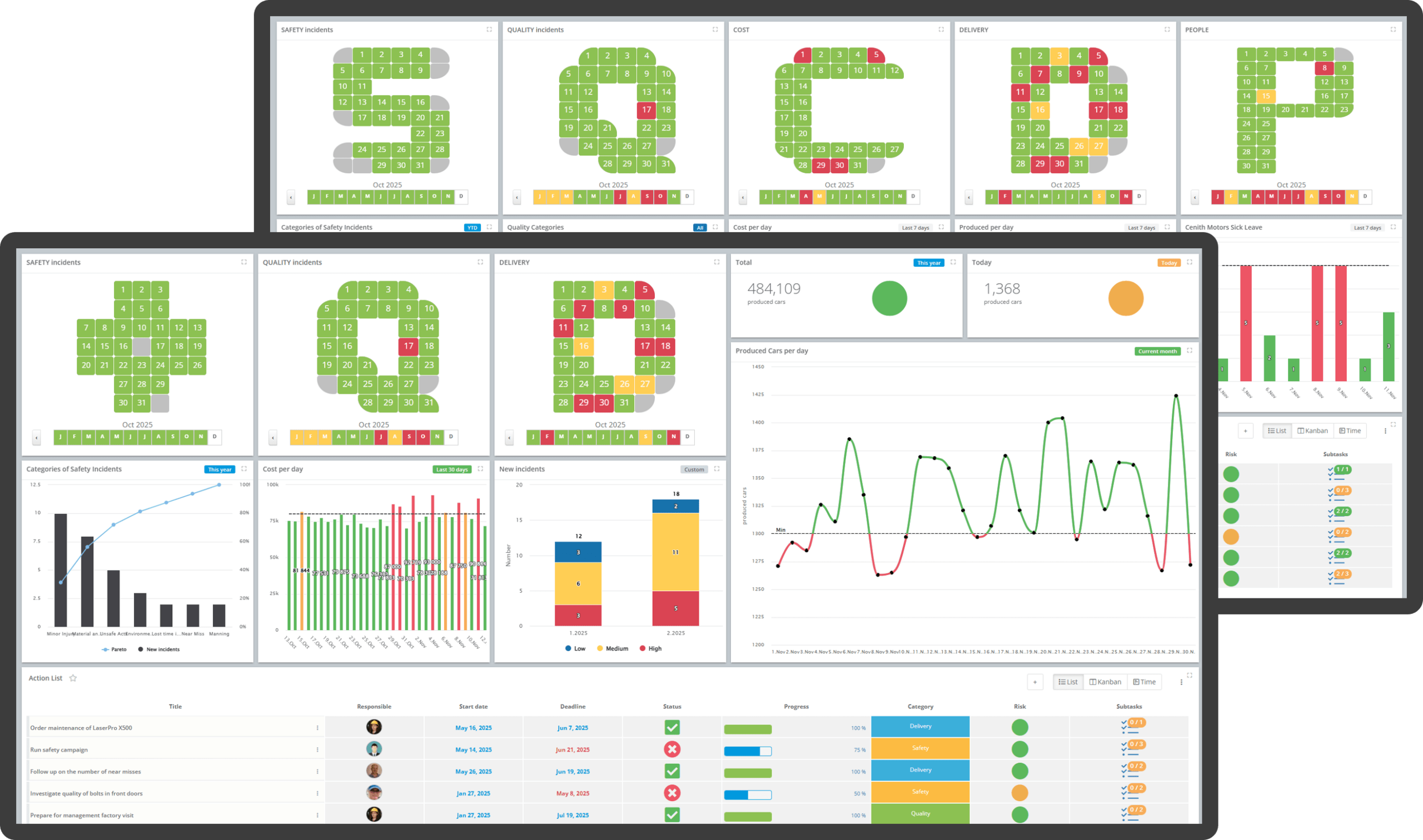
In manufacturing, a daily management board is a critical control point. When built on Lean visual management principles and supported by digital tools such as DigiLEAN, it becomes more than a board – it becomes a system for managing today’s performance and improving tomorrow’s results.
A daily management board is designed for daily control and action. It is reviewed in short, structured meetings and focuses on deviations, decisions, and follow-up.
A KPI dashboard is primarily a reporting tool. It shows performance data but does not define how teams should discuss problems, assign actions, or ensure follow-up.
In manufacturing, a daily management board is used to run the operation, not just to monitor it.
There is no single best daily management board template that works for every factory. However, most effective boards share common principles:
Templates should always be adapted to the production environment, process type, and team responsibility. Digital boards make this easier by allowing teams to adjust structure without redesigning physical boards.
Yes. A daily visual management board does not require high-volume, repetitive production.
In low-volume or high-mix environments, boards often focus more on:
The key is to visualize what limits flow and delivery on a daily basis, regardless of production type.
Most lean daily management boards work best with 5-7 KPIs at most.
If more metrics are needed, it is usually a sign that:
A good rule of thumb: if a KPI cannot trigger action today, it does not belong on the daily board.
You can learn how DigiLEAN supports digital daily management by watching the DigiLEAN intro video, by booking a demo, or you can see digital daily management boards live by starting a free trial and exploring the platform yourself.