In manufacturing, problems are unavoidable – but slow, unclear problem-solving is optional. Plants that consistently outperform others don’t necessarily face fewer issues; they resolve them faster and prevent recurrence.
One of the most effective methods for achieving this is A3 problem solving – a structured, visual approach rooted in Lean thinking. When combined with digital tools like DigiLEAN, A3 becomes even more powerful by improving visibility, accountability, and speed of execution.
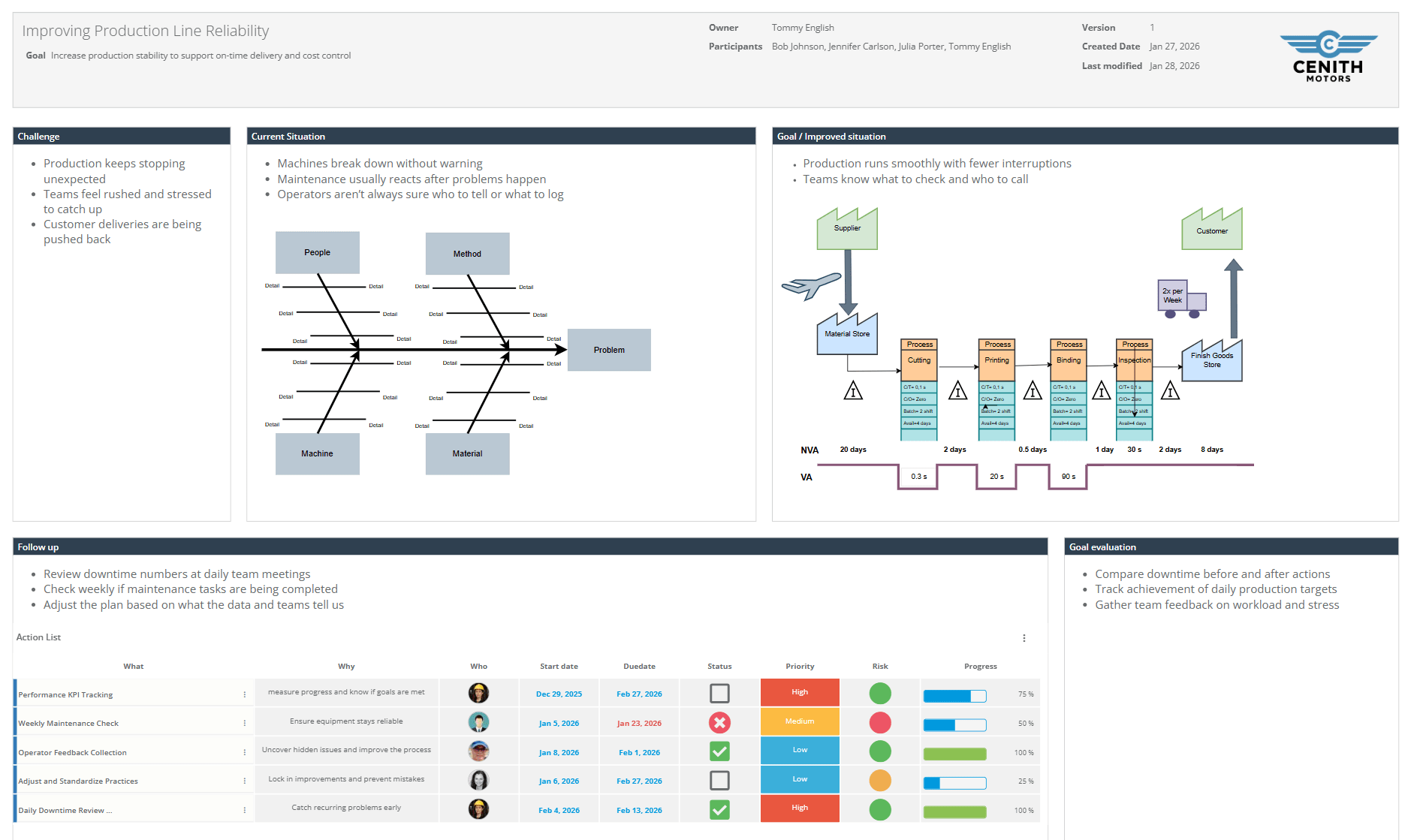
A3 problem solving is a structured method for identifying, analyzing, and resolving problems using a single-page report (traditionally in A3 size).
It requires teams to:
Many plants struggle with:
A3 addresses these challenges directly.
| Challenge in Plants | How A3 Solves It | Impact |
|---|---|---|
| Vague problems | Forces clear problem definition | Faster alignment |
| Firefighting culture | Focus on root cause analysis | Fewer recurring issues |
| Poor communication | Visual, structured format | Better cross-team understanding |
| Lack of ownership | Assigned responsibility | Faster execution |
| Weak follow-up | Defined actions & review | Sustained improvements |
Focus on facts – not assumptions.
Example:
 “Machine is unreliable”
 “Machine stops 6 times per shift, causing 45 min downtime”
Gather data:
Define what success looks like.
Example:
Reduce machine stoppages from 6 to 2 per shift within 30 days
Use tools like:
Actions must directly address root causes.
Assign:
Track results and update standard work.
A packaging line experiences recurring product defects.
| Step | How DigiLEAN Supports It |
|---|---|
| Problem identification | Logged directly on SQCDP board during shift |
| Data collection | Real-time defect tracking |
| Root cause analysis | Centralized notes and attachments |
| Action planning | Tasks assigned digitally with deadlines |
| Cross-shift visibility | All teams see same A3 in real time |
| Follow-up | Progress tracked daily in meetings |
A3 should not be a standalone exercise. It works best when integrated into daily management.
| Process | Role of A3 |
|---|---|
| Daily tier meetings | Review issues and escalate using A3 problem solving when needed |
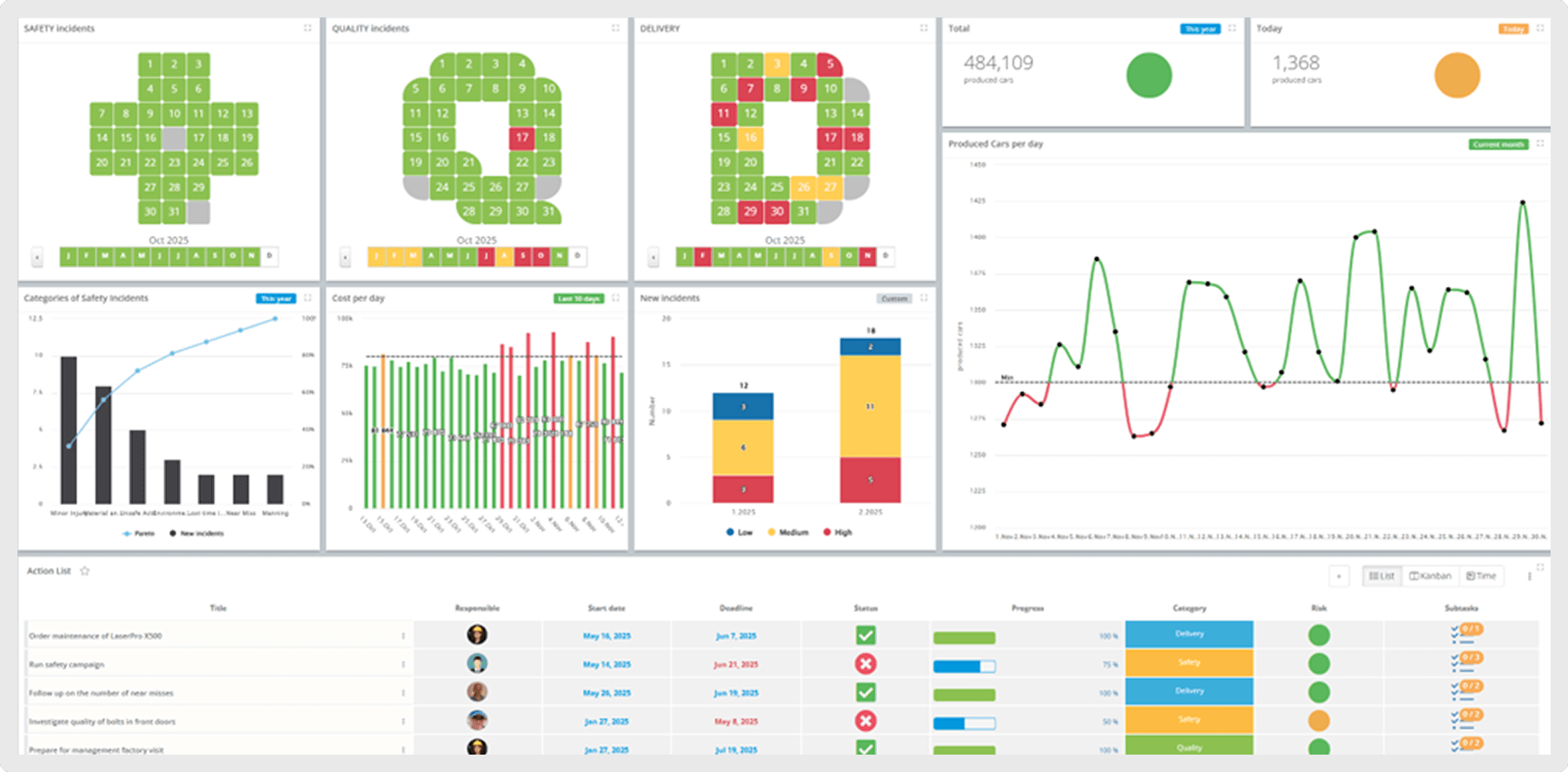
| SQCDP boards | Visual management for recurring deviations needing A3 |
| Continuous improvement | Structured problem-solving method |
| Management reviews | Track status, outcomes and historical data |
Avoid these pitfalls:
Digital tools remove many of the typical bottlenecks.
| Capability | Benefit |
|---|---|
| Real-time updates | Faster issue escalation |
| Centralized visibility | Everyone works from the same data |
| Task tracking | No lost actions |
| Cross-functional access | Better collaboration |
| Historical tracking | Learn from past issues |
A3 problem solving transforms how plants handle issues:
When combined with DigiLEAN, A3 becomes part of daily operations – not just a tool, but a capability that helps teams solve problems faster and run more stable, predictable production.
Use A3 when:
There is no fixed timeline. The key is:
Typically:
Ownership must be clear and visible.
Yes – A3 works equally well in:
Focus is critical.
Recommended:
| A3 Problem Solving | Action List |
|---|---|
| Focus on root cause | Focus on tasks |
| Structured thinking | Often reactive |
| Prevents recurrence | Often temporary fixes |
You can watch DigiLEAN intro video to learn more, book a demo to walk through the workflow with an expert, or see the platform live by starting a free trial and exploring it yourself.