In manufacturing, performance is won or lost on the shop floor – every shift, every hour, every decision. Yet many plants still struggle with unclear priorities, slow problem-solving, and inconsistent execution.
A Daily Management System (DMS) solves these challenges by creating a structured rhythm for tracking performance, identifying issues, and taking action – every single day.
This article explains how a daily management system improves shop floor performance; with practical examples you can apply immediately.
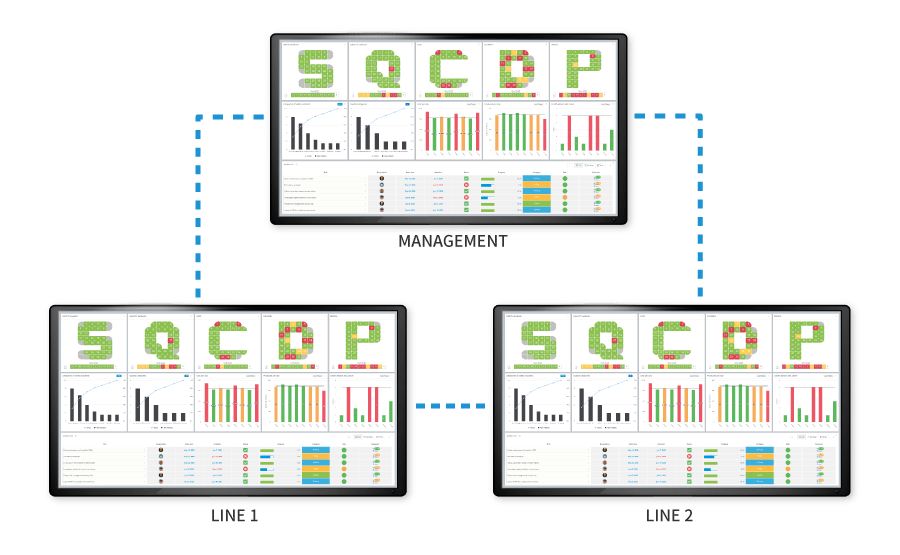
A Daily Management System is a structured way to manage operations through:
| Element | Description |
|---|---|
| KPI Tracking | Daily measurement of performance (e.g., output, scrap, downtime) |
| Visual Boards | Clear display of performance and issues |
| Daily Meetings | 10–15-minute stand-ups to review performance |
| Action Tracking | Follow-up on issues with clear ownership |
| Escalation Process | Structured way to raise unresolved issues |
👉 Goal: Make performance visible and drive action every day – not weeks later.
Without visibility, teams operate reactively.
A daily management system ensures everyone knows exactly how operations are performing – daily or in real time.
| Without DMS | With DMS |
|---|---|
| Weekly reports | Daily or real-time KPI updates |
| Limited operator awareness | Full team visibility |
| Delayed reaction to deviations | Immediate detection of issues |
A production team tracks:
By the morning meeting, they already know:
👉 Impact: Faster decisions and better control.
Many plants struggle with recurring issues because problems are not addressed quickly enough.
A daily management system introduces daily problem-solving discipline.
| Step | Description |
|---|---|
| Problem Identification | Issues are logged daily |
| Ownership Assignment | Assigned immediately during meetings |
| Action Tracking | Follow-up until closure |
| Root Cause Focus | Teams investigate recurring issues |
👉 Impact: Shorter problem resolution cycles and fewer repeated failures.
Shop floor performance depends on coordination across:
A daily management system aligns all teams through shared metrics and daily communication.
| KPI Area | Focus Example | Impact on Teams |
|---|---|---|
| Safety | Incident-free operations | Reinforces safe behaviors |
| Quality | Reduce defects | Quality & production collaboration |
| Cost | Reduce waste | Efficiency improvements |
| Delivery | Meet production targets | Output alignment |
| People | Attendance & engagement | Team performance |
👉 Impact: Everyone focuses on the same priorities every day.
A common challenge in manufacturing is unclear ownership.
A daily management system makes accountability visible and consistent.
| Element | Outcome |
|---|---|
| Named KPI owners | Clear responsibility |
| Assigned actions | No ambiguity in ownership |
| Daily follow-up | Tasks are not forgotten |
| Escalation rules | Issues are not stuck |
👉 Impact: Higher execution discipline and fewer dropped tasks.
A daily management system replaces assumptions with facts.
Instead of guessing what’s wrong, teams rely on structured data.
| Without DMS | With DMS |
|---|---|
| Gut feeling | Data-driven decisions |
| Incomplete information | Standardized KPIs |
| Delayed insights | Daily performance tracking |
👉 Impact: Faster and more accurate decision-making.
A Daily Management System brings leadership closer to operations.
| Traditional Approach | With DMS |
|---|---|
| Reviewing reports in meetings | Engaging directly on shop floor |
| Reactive decisions | Real-time support |
| Limited visibility | Firsthand insights |
👉 Impact: Faster escalation handling and stronger team support.
A daily management system creates daily improvement habits.
Over time, teams:
Small recurring issues (e.g., micro-stops):
👉 Impact: Small daily gains lead to major performance improvements.
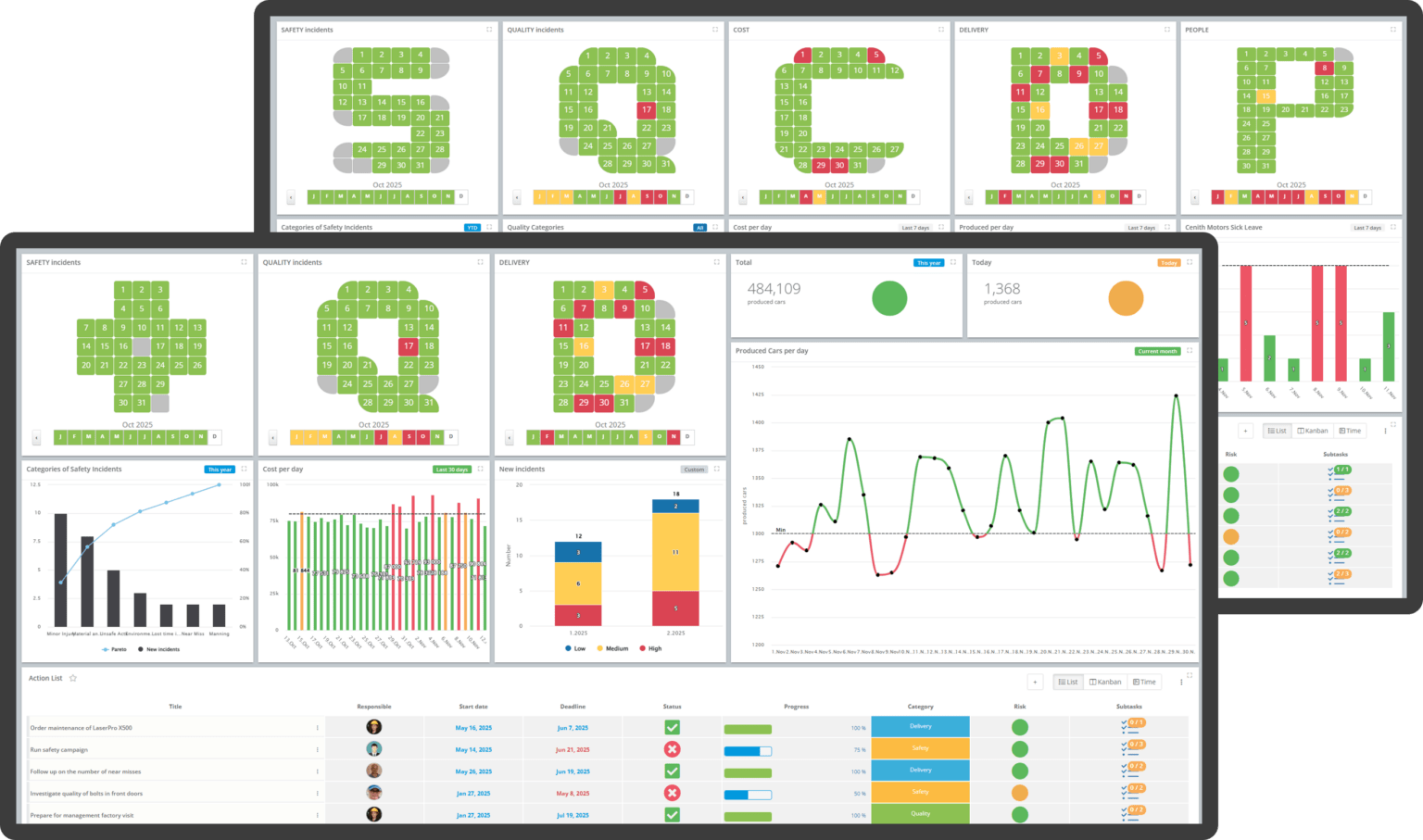
Many manufacturers are moving from manual boards to digital daily management systems.
Manual vs. Digital daily management system
| Manual Boards | Digital DMS |
|---|---|
| Manual updates | Real-time data integration |
| Limited visibility | Accessible across teams & sites |
| Time-consuming maintenance | Automated KPI tracking |
| Static information | Dynamic, interactive dashboards |
👉 Impact: Faster, more scalable, and more reliable operations.
The real power of a Daily Management System is not the board or the KPIs.
It’s the daily rhythm of execution.
When teams consistently:
…shop floor performance becomes predictable, controllable, and continuously improving.
Implementation time varies depending on maturity, but most teams can:
👉 Start small: focus on 3–5 KPIs and one daily meeting
An effective daily meeting is:
| Step | Purpose |
|---|---|
| Review KPIs | Identify deviations |
| Discuss issues | Highlight key problems |
| Assign actions | Ensure follow-up |
| Confirm priorities | Align for the day |
Common pitfalls include:
👉 The system must drive action – not just reporting.
Yes – but with limitations.
👉 Many companies start manual and transition to digital.
Sustainability depends on:
👉 The key is discipline – not complexity.
You can watch DigiLEAN intro video to learn more, book a demo to walk through the workflow with an expert, or see the platform live by starting a free trial and exploring it yourself.