Two terms often used in continuous improvement are Corrective Action and Root Cause Analysis (RCA). While they are closely connected, they serve different purposes. Understanding the difference is essential for preventing recurring problems and driving sustainable operational improvement.
This article explains what corrective action and root cause analysis are, how they differ, when to use them, and how digital Lean platforms like DigiLEAN help teams manage both more effectively.
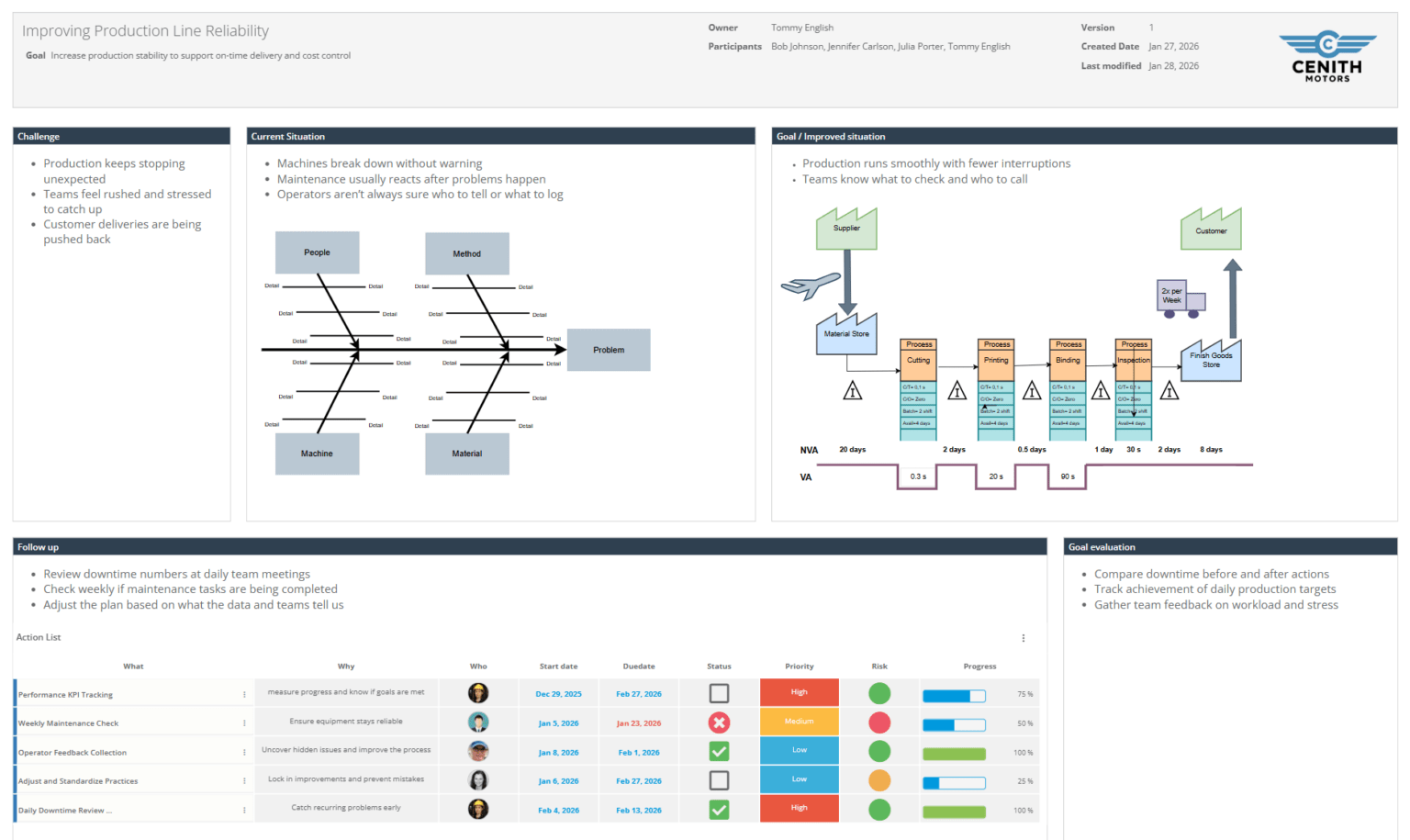
Root Cause Analysis (RCA) is a structured problem-solving method used to identify the underlying reason a problem occurred.
Rather than treating visible symptoms, RCA helps teams discover what triggered the issue in the first place.
A packaging line experiences frequent stoppages. Without RCA, the team might simply restart the line each time it stops.
With RCA, they investigate questions such as:
Eventually, they may discover that preventive maintenance schedules are inconsistent, causing premature wear on a critical component.
The maintenance process, not the machine stoppage itself, is the root cause.
| Method | Purpose |
|---|---|
| 5 Whys | Repeatedly ask "Why?" until the underlying cause is identified. |
| Fishbone Diagram (Ishikawa) | Categorize potential causes into areas such as People, Process, Equipment, Materials, and Environment. |
| Fault Tree Analysis | Map relationships between failures and contributing factors. |
| Pareto Analysis | Identify the most significant causes contributing to a problem. |
| A3 Problem Solving | Structured Lean approach to solving operational issues. |
Corrective Action refers to the steps taken to eliminate a problem and prevent it from happening again.
Once the root cause is identified, corrective actions are implemented to address it.
Continuing the packaging line example:
Root Cause Identified: Preventive maintenance schedules are not being followed consistently.
Corrective Actions:
These actions eliminate the root cause and reduce the likelihood of recurring downtime.
| Area | Root Cause Analysis | Corrective Action |
|---|---|---|
| Purpose | Identify why a problem occurred | Eliminate the cause and prevent recurrence |
| Focus | Investigation | Implementation |
| Timing | Before action planning | After causes are identified |
| Output | Root cause(s) identified | Improvement actions executed |
| Main Question | Why did this happen? | What will we do about it? |
| Typical Tools | 5 Whys, Fishbone, A3 | Action plans, task management, standard work updates |
| Success Measure | Cause clearly identified | Problem does not return |
A simple way to remember the difference:
Root Cause Analysis finds the reason. Corrective Action solves the reason.
Many plants move directly to corrective actions without conducting proper root cause analysis.
This creates a cycle of recurring problems.
| Problem | Quick Fix | Root Cause Missing? |
|---|---|---|
| Quality defects | Rework defective products | Yes |
| Machine failure | Replace damaged component | Yes |
| Missed production target | Add overtime | Yes |
| Inventory shortages | Expedite deliveries | Yes |
These actions may restore short-term performance, but the underlying issue often remains unresolved.
As a result:
Lean organizations focus on solving problems permanently rather than repeatedly fighting symptoms.
Many manufacturers still manage improvement activities through spreadsheets, emails, and paper-based systems. This often results in delayed follow-up, poor visibility, and incomplete problem resolution.
DigiLEAN helps teams create a structured, transparent, and trackable problem-solving process.
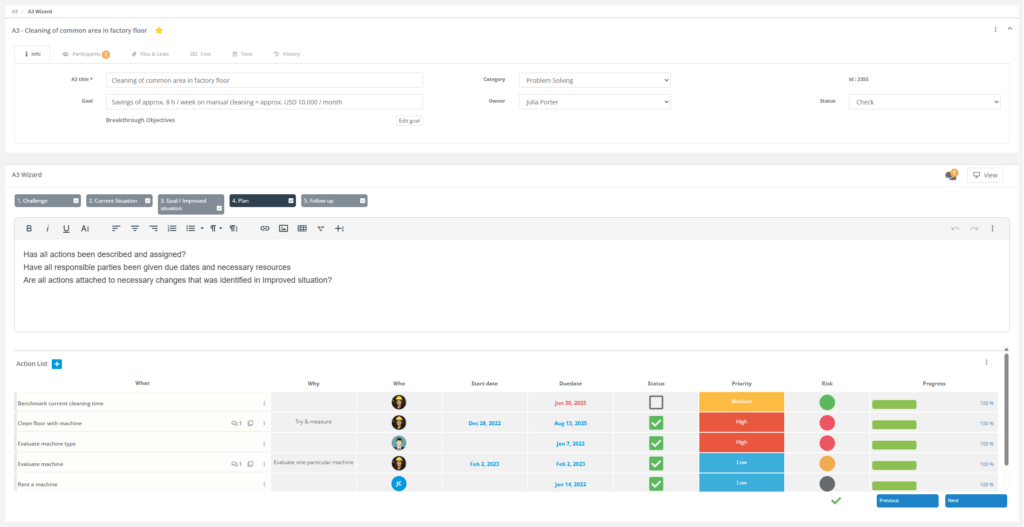
Teams can:
Once causes are identified, teams can:
A production supervisor identifies recurring downtime on an SQCDP board.
Using DigiLEAN:
This creates a clear connection between problem identification, root cause analysis, corrective actions, and measurable business results.
No. RCA can be applied to virtually any operational challenge, including equipment failures, safety incidents, production delays, inventory problems, maintenance issues, and customer complaints.
The complexity of the problem determines the effort required. Simple issues may require only a short 5 Whys discussion, while complex recurring problems may need a cross-functional investigation over several days or weeks.
Yes. Many manufacturing problems result from a combination of process, equipment, training, and management factors. Effective RCA should identify all significant contributors.
If the problem continues, teams should revisit the RCA process. An ineffective corrective action often indicates that the true root cause was not fully identified.
Organizations typically track performance indicators related to the original problem, such as defect rates, downtime, safety incidents, or schedule adherence, to confirm that improvement has been sustained.
You can watch DigiLEAN intro video to learn more, book a demo to walk through the workflow with an expert, or see the platform live by starting a free trial and exploring it yourself.