Physical Lean tools – whiteboards, printed A3s, spreadsheets, and binders – are a familiar sight on manufacturing shop floors. They are visible, simple to start with, and often effective for localized team routines.
As operations grow, manual tools lose effectiveness. It becomes harder to ensure:
Research shows that combining digital tools with Lean practices improves:
Lean software, including lean management and lean manufacturing software, preserves the intent of Lean while solving the limitations of paper-based systems.
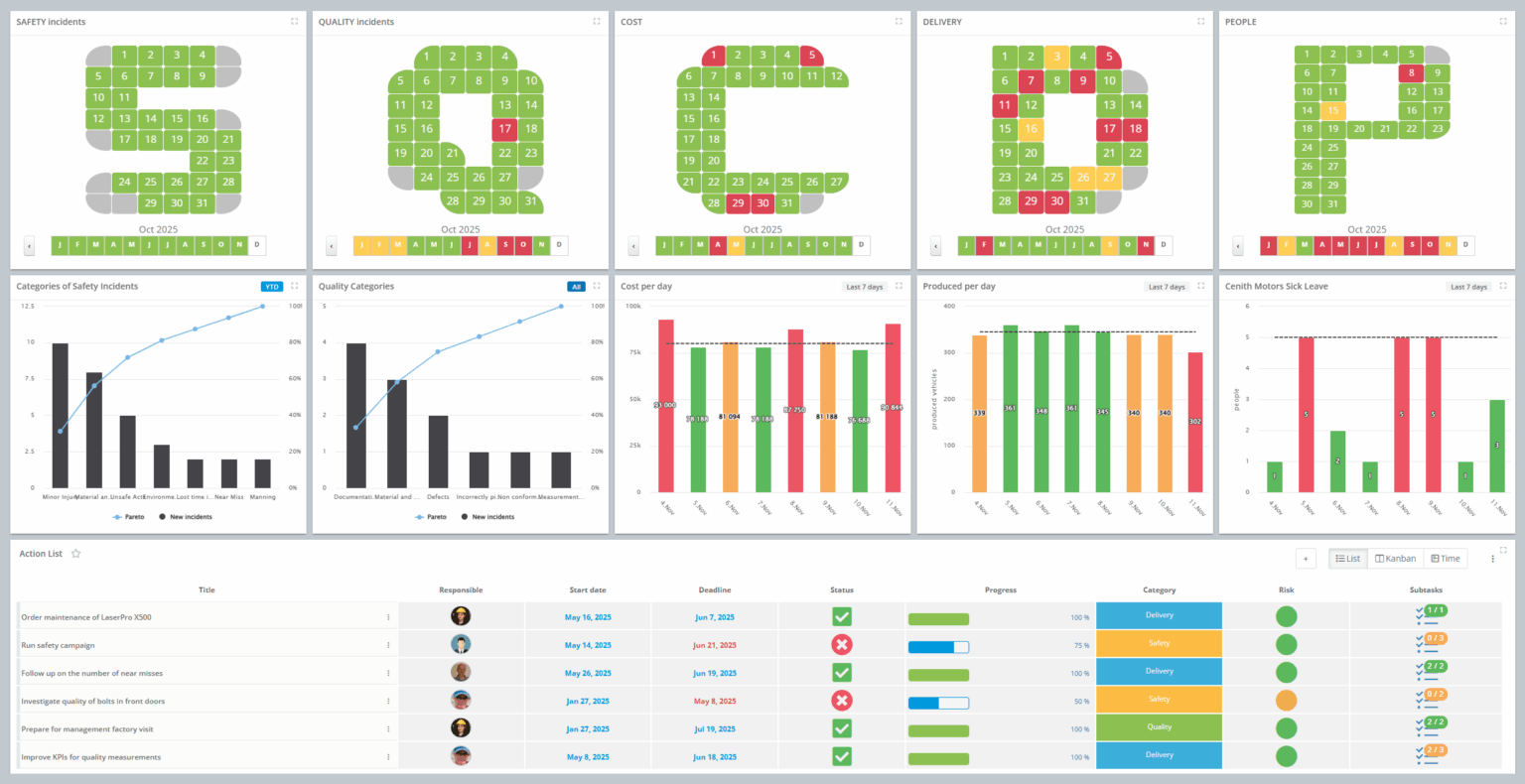
Paper Lean tools became widespread because they are:
These tools work reasonably well in early Lean maturity – typically for small teams with limited complexity.
Paper-based Lean supports visibility, but it doesn’t provide system-level control. As complexity grows, manual updates must happen every shift, information becomes stale, and teams lose continuity.
Research into Lean digitalization suggests that manual systems create inefficiencies and learning gaps that digital tools can mitigate.
This gap between visibility and systemic reliability sets up the need for lean manufacturing software.
Manufacturing environments today demand:
Paper-based systems fail because:
The result: Lean routines exist, but reliability is low, and improvement work becomes reactive rather than structured.
Jeffrey Liker and Mike Rother — noted researchers in Lean systems — show in Why Lean Programs Fail that most organizations struggle to sustain improvement systems over time. The challenge is not Lean principles but how they are supported at scale.
This is where lean software offer a compelling alternative.
Lean software in manufacturing refers to digital systems specifically designed to support:
Rather than replacing Lean thinking, lean software reinforces it by embedding structure and traceability into daily work.
Lean software helps teams:
Lean software is:
Instead, it supports Lean behaviors by linking routines and outcomes in a digital system.
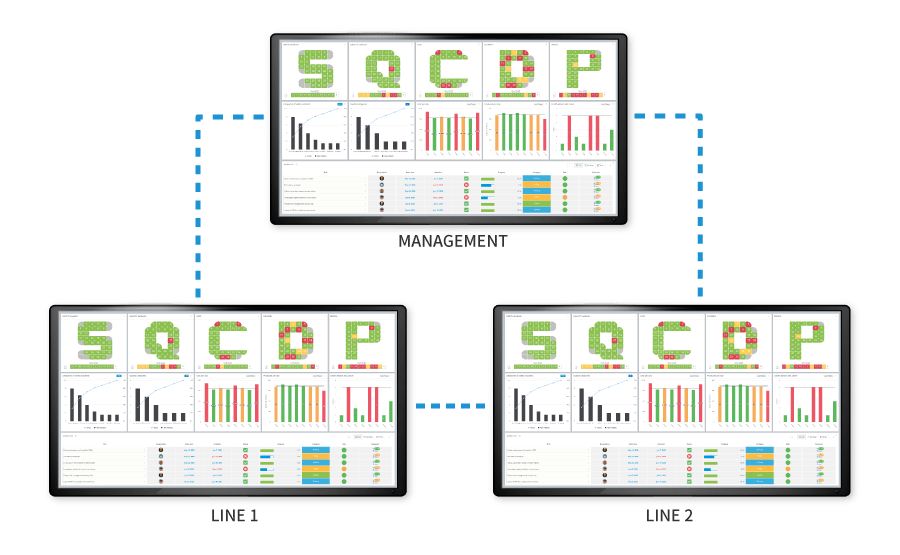
The foundational principles in Lean – visual management, daily control, standard work, problem solving, and learning – are applied
| Lean Principle | Paper-Based Lean | Lean Software |
|---|---|---|
| Visual management | Static information that depends on frequent manual updates and physical presence | Always-current visuals that reflect real status and follow-up across teams and locations |
| Daily control | Relies on manual discipline to update, escalate, and follow up | Built-in structure supports consistent daily routines and reliable follow-up |
| Standard work | Locally interpreted, leading to variation between teams and shifts | Consistent application of standards across teams, shifts, and sites |
| Problem solving | Isolated A3s and issues with limited connection to actions and outcomes | Connected problem solving with traceable actions and follow-up over time |
| Learning | Temporary and often lost when people move roles or boards are reset | Learning retained and accessible, supporting continuous improvement over time |
This aligns with research that finds digitalization fosters both routinized and evolutionary learning in Lean environments, strengthening organizational capability over time.
Lean manufacturing software is designed to support everyday operational routines with less manual effort and more reliability.
Core support includes:
In essence, lean manufacturing software enables the same Lean routines – but with:
Research into digitized Lean boards suggests that analogue boards can create unnecessary waste compared to digital alternatives, particularly where data handling and transfer is time-consuming and error-prone.
As Lean practice matures, organizations often adopt broader oversight of improvement initiatives. Lean portfolio management software supports:
In DigiLEAN, projects and strategic initiatives are connected to daily management, ensuring that improvement work remains grounded in shop-floor reality rather than disconnected reporting.
Common signals that paper-based Lean is no longer sufficient include:
Adopting lean software isn’t about digital transformation for its own sake – it’s about restoring trust in Lean routines and ensuring reliability as complexity grows.
Paper-based Lean creates visibility but depends heavily on human discipline. As operations grow, this reliance becomes a liability.
Lean software strengthens Lean principles by adding structure, continuity, and traceability. By reducing manual effort, preserving learning, and improving reliability, lean manufacturing software helps organizations manage daily performance while sustaining continuous improvement long-term.
DigiLEAN helps organizations regain that trust by ensuring follow-up, continuity, and transparency without changing how Lean is practiced.
Lean software provides traceability, real-time status, cross-team continuity, and structured follow-up – areas where spreadsheets fall short.
Yes. It can enhance reliability early, though its value increases with complexity.
When improvement initiatives broaden and strategic alignment needs to be visible across teams and locations.
In practice, the terms overlap. Lean management software emphasizes routines and leadership support, while lean software refers broadly to digital tools supporting Lean principles.
You can watch DigiLEAN intro video to explore digital Lean, book a demo to walk through the workflow with an expert, or see Lean software live by starting a free trial and exploring the platform yourself.