A practical guide to structuring tiered meetings that actually improve daily performance.
This article is written for manufacturing professionals responsible for daily operations, performance management, and continuous improvement, particularly in organizations where tiered meetings already exist but do not consistently deliver value.
It is especially relevant for teams experiencing challenges such as unclear escalation, weak follow-up, or meetings that focus more on reporting than on solving problems.
Tier meetings are not isolated events. They are a core component of the daily management system in manufacturing environments.
When the structure of meetings is unclear or inconsistent, tier meetings tend to drift. Discussions become broad, escalation becomes informal, and follow-up actions are easily lost. Over time, this weakens trust in the system and reduces engagement.
When a tier meeting is well structured, it serves a clear operational purpose:
Lean research consistently shows that short, structured, and visual daily meetings improve operational control and responsiveness:
Without structure, tier meetings become time-consuming routines. With structure, they become a reliable way to manage performance every day.
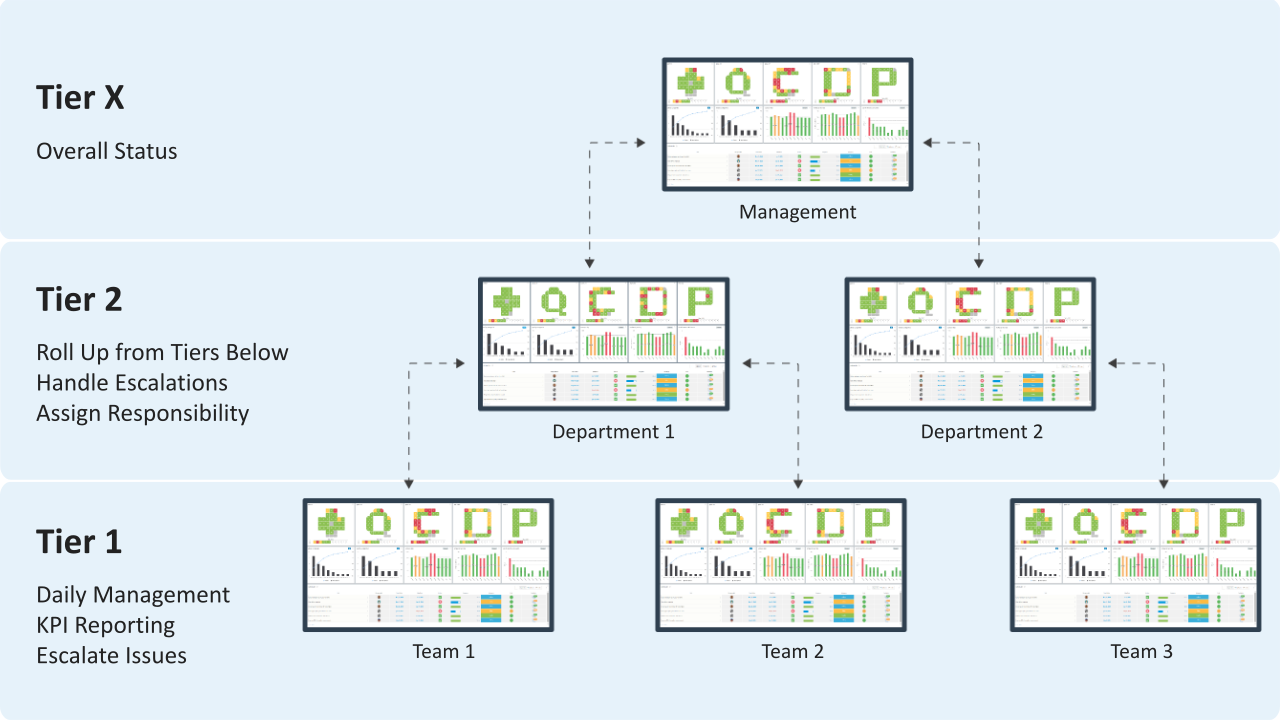
Tier meetings are short, recurring meetings organized by organizational level. Each tier focuses on managing performance, identifying deviations, and escalating issues that cannot be solved at the current level.
Together, these meetings form a tiered management system that connects the shop floor with plant and leadership levels.
| Tiered Meetings | Regular Status Meetings |
|---|---|
| Focus on deviations from standard | Focus on reporting results |
| Clear, repeatable structure | Agenda often changes |
| Defined escalation between tiers | Issues remain local |
| Visual management driven | Slide- or verbal-based |
Tiered meetings are not about explaining everything that happened. They are about identifying what did not go as planned and what must happen next.
A tier board is the visual anchor of a tier meeting. It makes the structure of the meeting visible and keeps the discussion focused.
| Category | Why it matters |
|---|---|
| Safety | Prevents normalization of risk |
| Quality | Highlights defects and rework early |
| Delivery | Shows plan vs. actual performance |
| Actions | Ensures follow-up and accountability |
| Escalations | Connects tiers and decisions |
Visual management reduces interpretation and shortens decision-making time. According to Harvard Business Review, visual systems help teams respond faster and stay aligned on priorities.
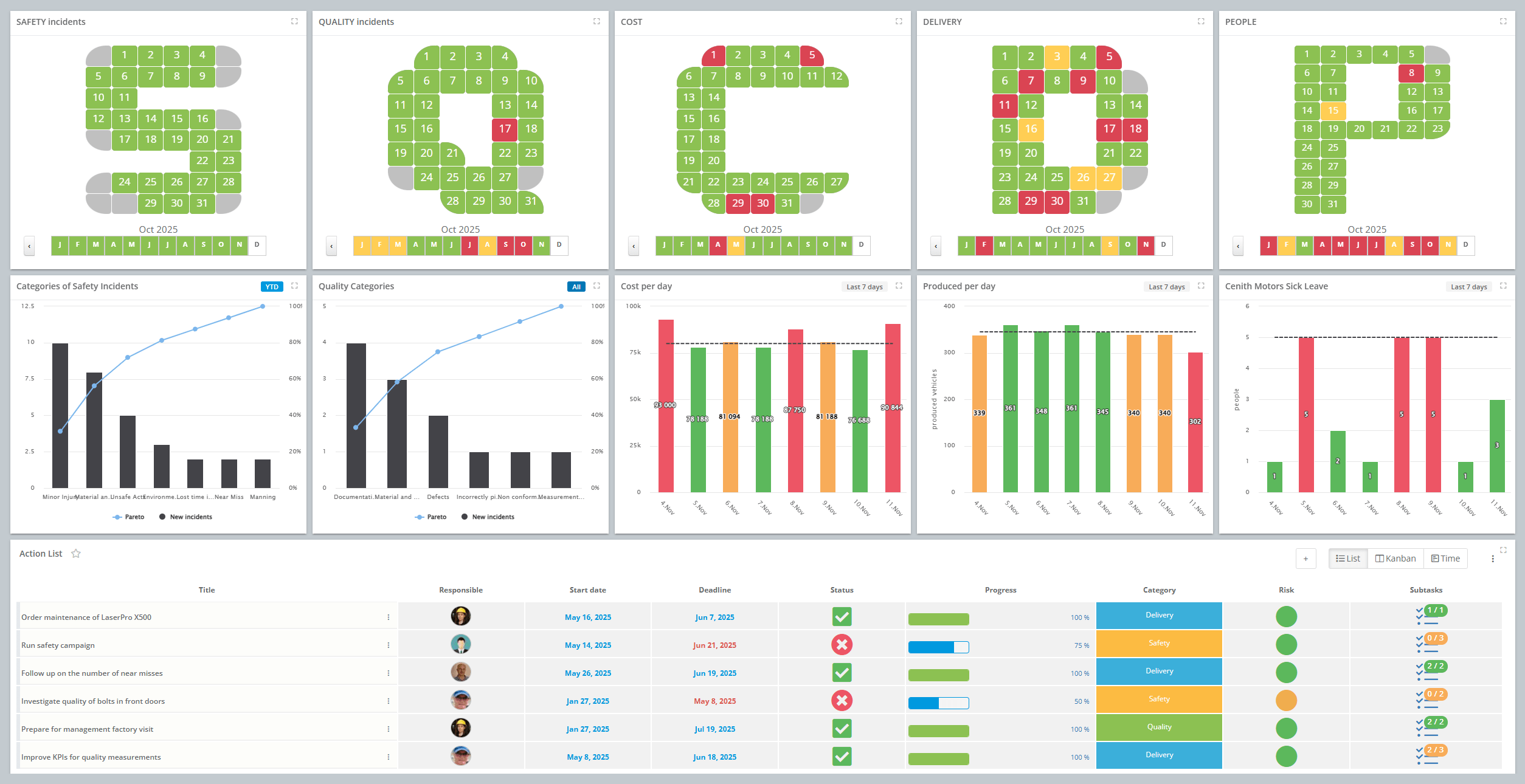
The Tier 1 meeting takes place at team level and focuses on today’s execution.
Tier 1 meetings commonly fail when they:
Practical fix
Limit discussion to deviations from standard and assign one clear owner and due date for every action.
DigiLEAN interactive boards allow team leaders record deviations directly on the Tier 1 board. Actions remain visible until closed and are accessible on mobile for shift-based teams.
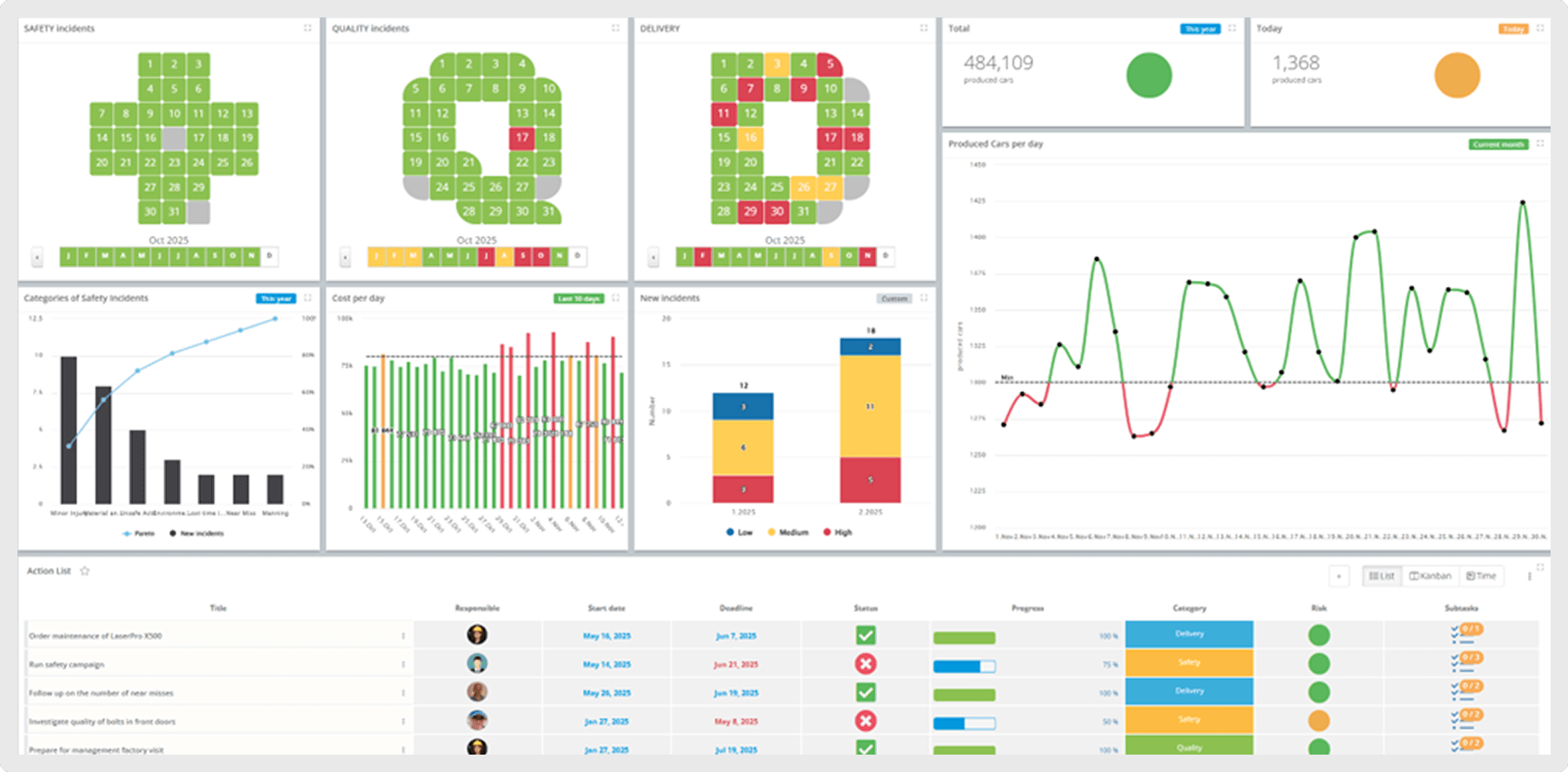
The Tier 2 meeting connects multiple teams and functions. Its purpose is to address issues that cannot be resolved at team level.
What Tier 2 meetings should focus on
Escalate to Tier 2 when
When using DigiLEAN boards, escalated issues move from Tier 1 to Tier 2 boards without losing context. Ownership, data, and history remain intact, reducing re-explanation and delays.
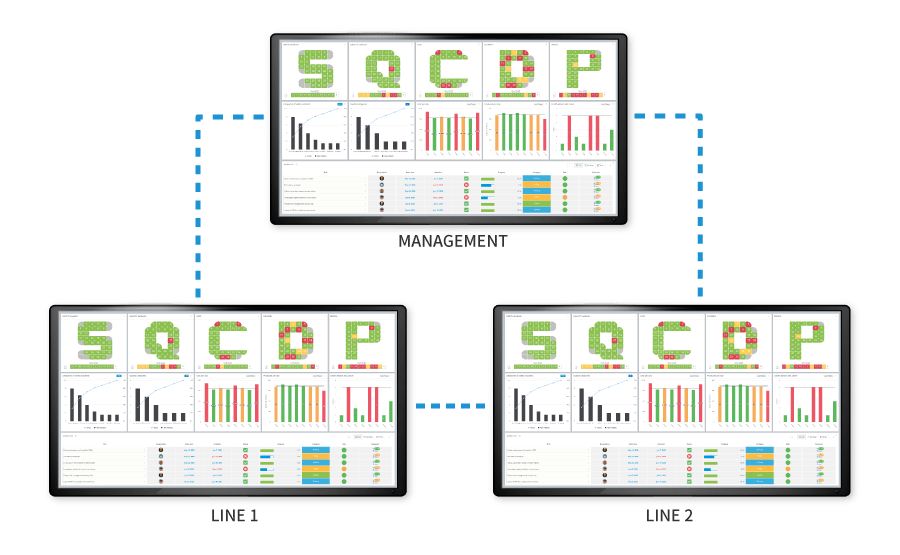
The Tier 3 meeting provides plant or value-stream level oversight.
Purpose of Tier 3 meeting
Tier 3 meetings should avoid operational firefighting. Instead, they should focus on patterns and root causes.
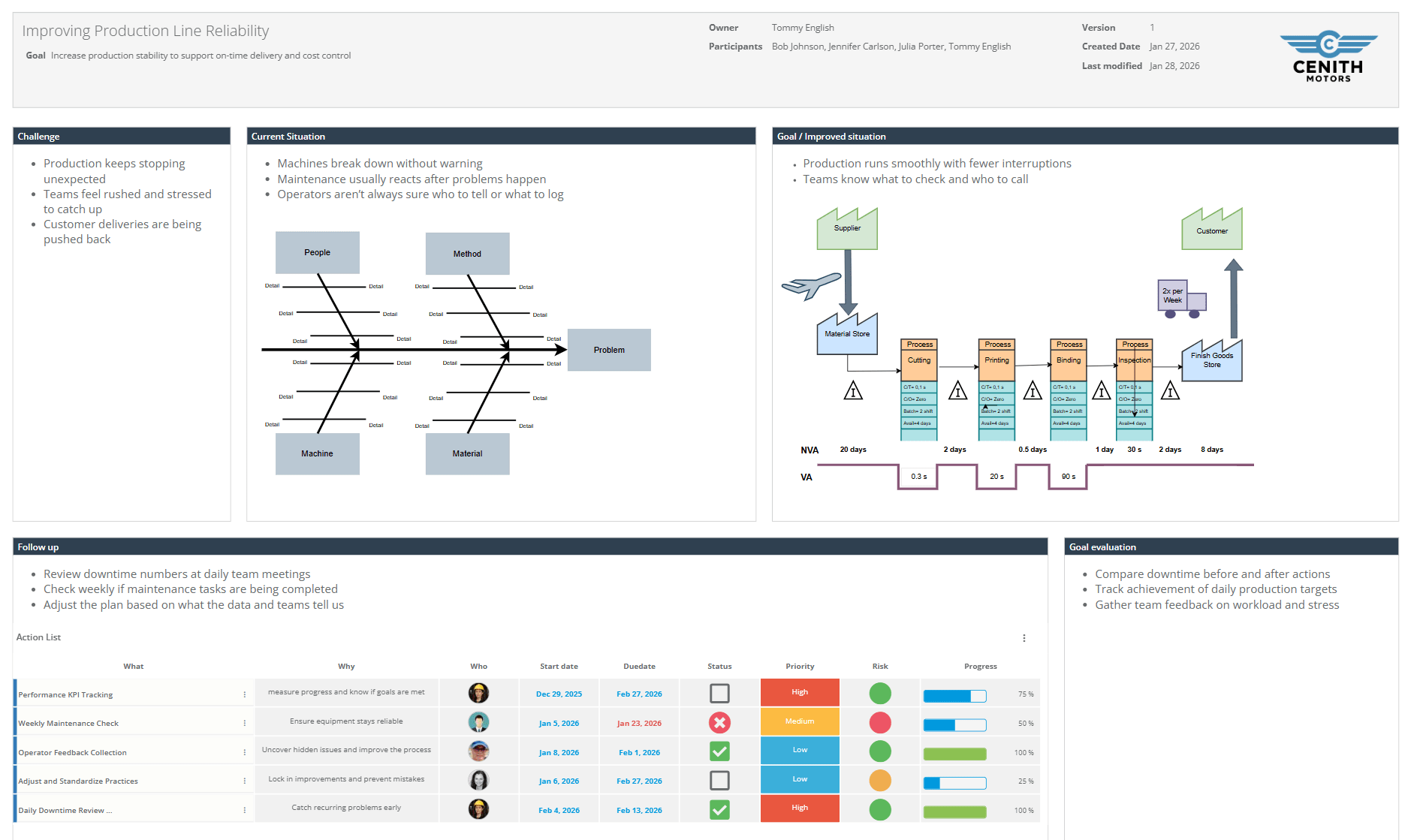
Recurring tier issues can be linked directly to A3 Problem Solving and Improvements in DigiLEAN, ensuring problems are addressed systematically rather than repeatedly discussed.
Tier meetings in manufacturing rarely fail because people do not care or lack discipline. In most cases, tier meetings fail because the system surrounding them does not support clear problem identification, escalation, and follow-up.
When tier meetings are introduced without sufficient clarity, they quickly become routine calendar events rather than active management tools. Over time, teams attend meetings because they are expected to, not because the meetings help them run operations better.
Tier meetings fail not because the concept is flawed, but because the structure of meetings is not designed to support daily operational reality.
Making tier meetings work does not require longer meetings or more data. It requires clear structure, disciplined focus, and consistent execution.
The following practical fixes can be applied immediately and do not require major organizational change.
| Improvement | How it helps |
|---|---|
| Standard agendas | Creates consistency and focus |
| Clear escalation criteria | Prevents issues from stalling |
| Deviation-based discussion | Prioritizes real problems |
| Action discipline | Ensures accountability |
| Consistent visuals | Improves understanding |
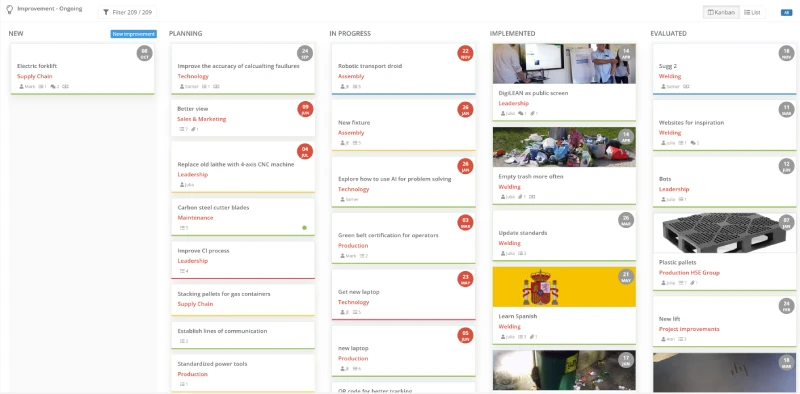
DigiLEAN supports these improvements by providing a standardized digital structure for tier meetings while maintaining visibility and follow-up without additional administrative effort.
Many organizations attempt to improve tier meetings while still relying on physical boards, spreadsheets, or slide decks. While these tools may work in small settings, they often break down as complexity increases.
Limitations of physical and manual tools
Physical tier boards and spreadsheets:
As a result, leaders spend more time chasing updates than removing obstacles.
Digital solutions support tier meetings by reinforcing structure and visibility rather than replacing leadership.
| Digital capability | Operational impact |
|---|---|
| Always up-to-date boards | Decisions are based on facts |
| Action tracking across tiers | Follow-up becomes reliable |
| Cross-tier visibility | Escalation is faster and clearer |
| Mobile access | Supports shift-based operations |
Teams use DigiLEAN to run Tier 1 meetings directly at the shop floor, escalate issues digitally to Tier 2, and provide Tier 3 leaders with a real-time overview of risks, trends, and unresolved actions.
Tier meetings deliver sustainable value only when they are treated as a connected daily management system, not as isolated meetings at different organizational levels.
When tier meetings are well structured, they create a clear operational rhythm:
Tier meetings must be deliberately designed to support daily operations. Structure drives behavior, and behavior drives results. Visibility, escalation, and follow-up determine whether tier meetings improve performance or simply consume time.
Digital tools such as DigiLEAN strengthen tier meetings by making structure visible and follow-up reliable, but they do not replace leadership, ownership, or disciplined execution.
Tier meetings should be short enough to maintain focus. In most manufacturing environments, Tier 1 and Tier 2 meetings are effective at 10–15 minutes when the structure is clear.
Tier 1 meetings are typically held daily. Tier 2 and Tier 3 meetings should follow a regular and predictable cadence that reflects operational complexity.
Tier meetings can succeed without digital tools, but maintaining consistency, visibility, and follow-up becomes significantly harder as the organization grows.
Tier meetings lose credibility when actions are not followed up and when escalation does not lead to decisions or support.
Tier meetings surface recurring deviations that should trigger structured improvement work and A3 problem solving rather than repeated discussion.
You can watch DigiLEAN boards DigiLEAN boards intro video to deepen your understanding of digital Tier boards, book a demo to walk through the workflow with an expert, or see digital Tier boards live by starting a free trial and exploring the platform yourself.