Industry
Food Manufacturing
Employees
1000
Locations
Worldwide
Solution
DigiLEAN – Digital Daily Management & Continuous Improvement
Kavli is a Nordic food producer with manufacturing sites in several countries, producing well-known spreads and food products for millions of consumers. The company has worked with Lean and continuous improvement for many years. Kavli is owned by Kavli Trust, which donates all of its profits to good causes.
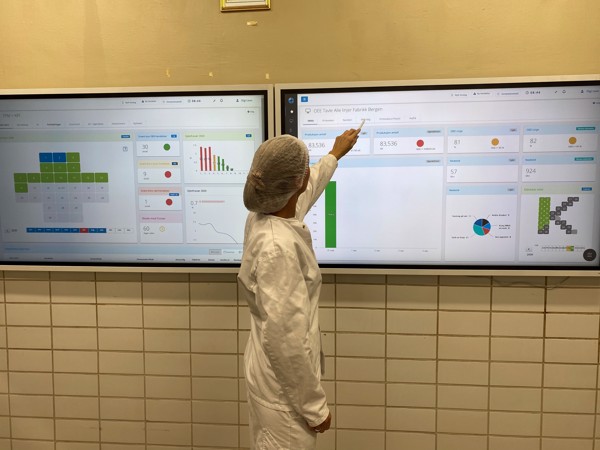
Despite a mature improvement culture: their daily operations relied heavily on manual boards and scattered documentation stored in Excel files and Word documents.
Kavli began exploring options for streamlining their improvement initiatives. The team quickly realized that a simple document management solution wouldn’t be enough.
This search led them to DigiLEAN.
The results:
Kavli first launched a pilot with a group of 10 employees to test functionality, usability, and impact.
After testing out DigiLEAN they noticed:
With demonstrated value and a developing enthusiasm among the teams, Kavli moved to a full international rollout.
Thanks to strong engagement, clear use cases, and DigiLEAN’s functionality and customer support, Kavli saw measurable ROI early in the rollout phase – through time saved, improved problem-solving, and reduced operational waste.
Kavli highlighted DigiLEAN’s onboarding as a key success factor. The guidance and support ensured that sites were equipped to adopt the tool effectively.
Today, DigiLEAN is fully deployed across multiple Kavli production sites, serving as a central platform for daily operations and long-term improvement. Teams use a wide range of modules, including:
Digital lean boards have eliminated the inefficiencies of paper-based workflows. Teams now benefit from:
This has boosted productivity at every level.
With better visibility into issues and faster problem identification, Kavli has reduced downtime and reacted more quickly to production deviations. The digital boards help teams escalate, follow up, and resolve issues in a structured and timely way.
The shift from physical boards and printed documentation to digital tools significantly reduced paper consumption.